
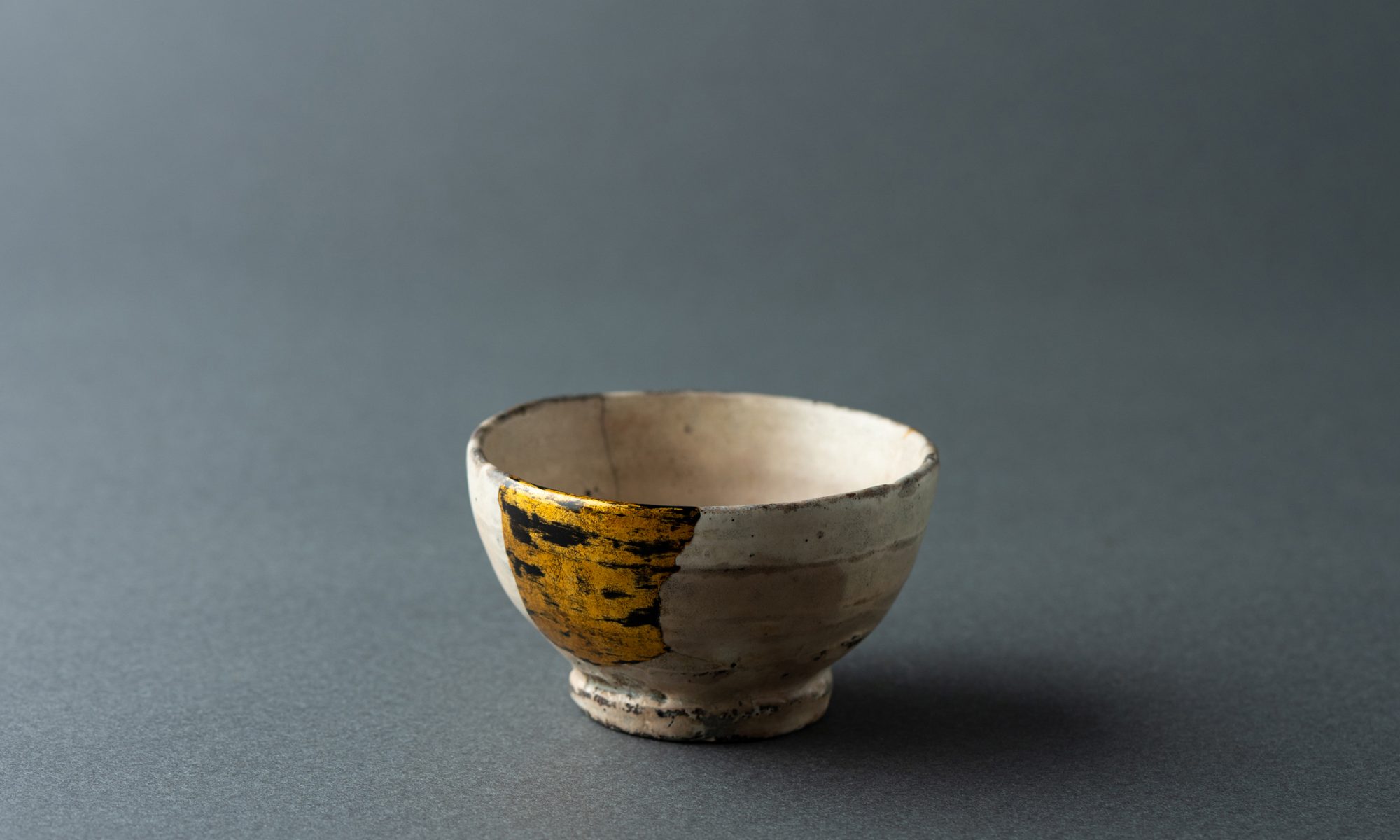
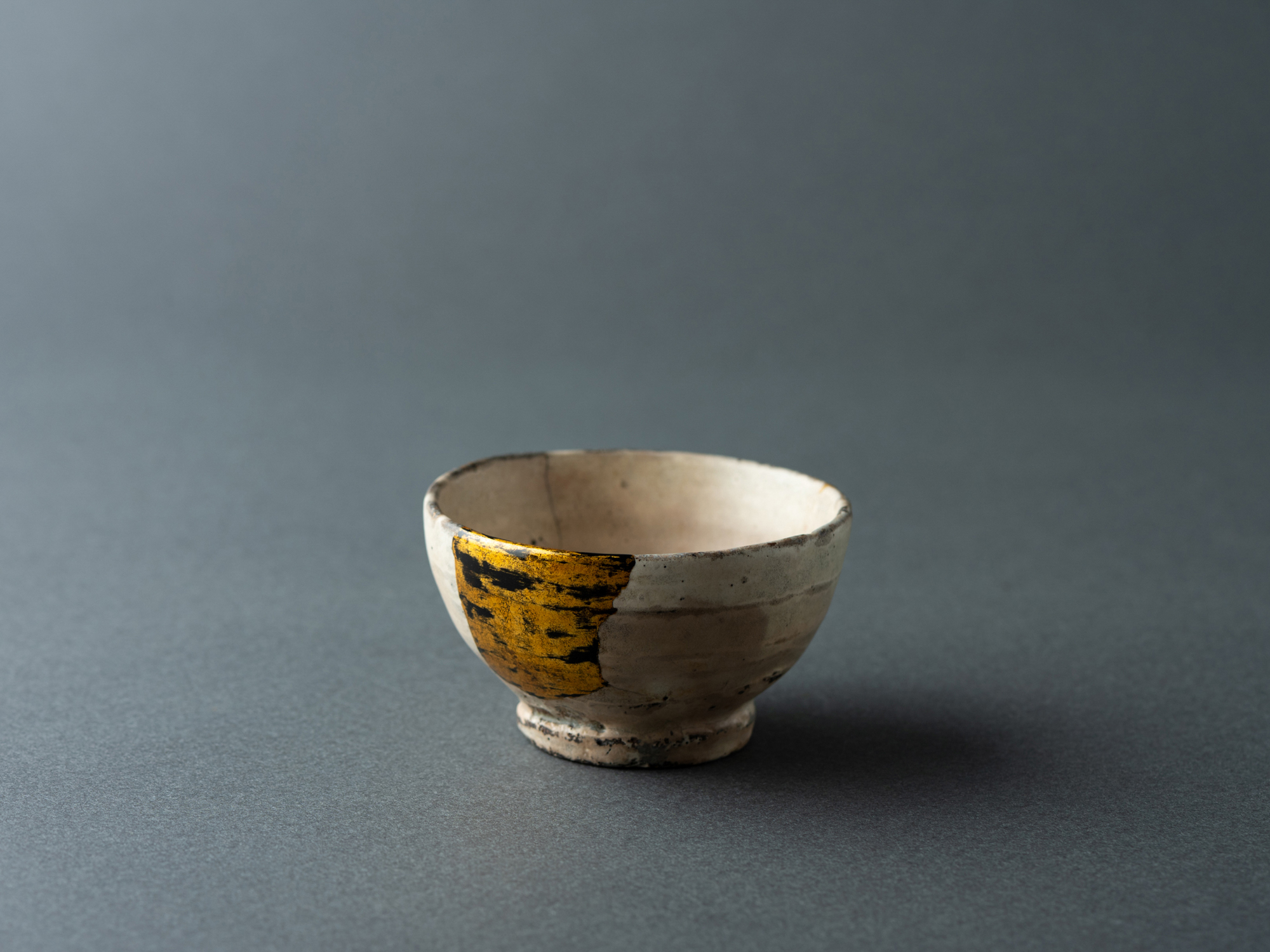
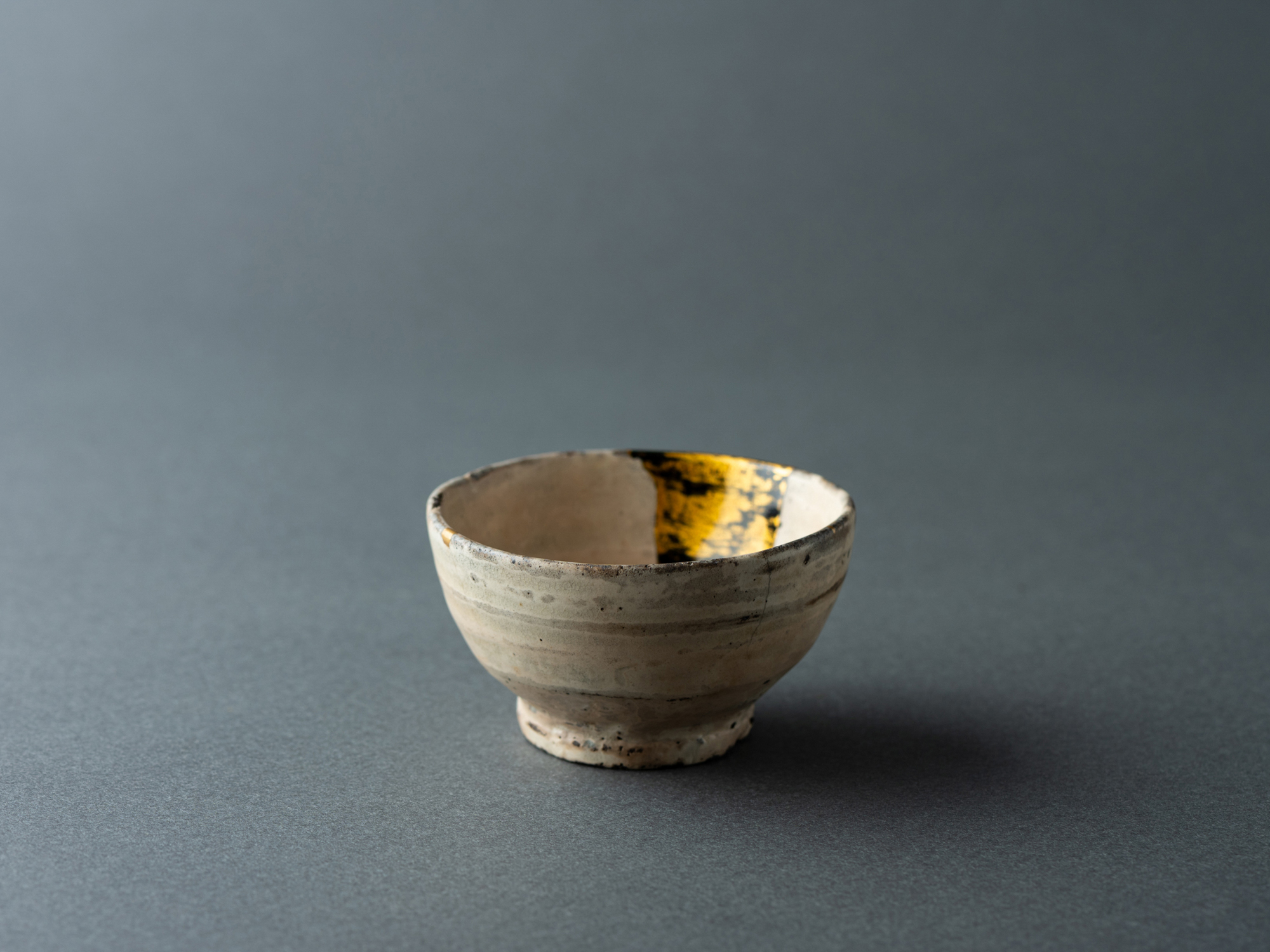
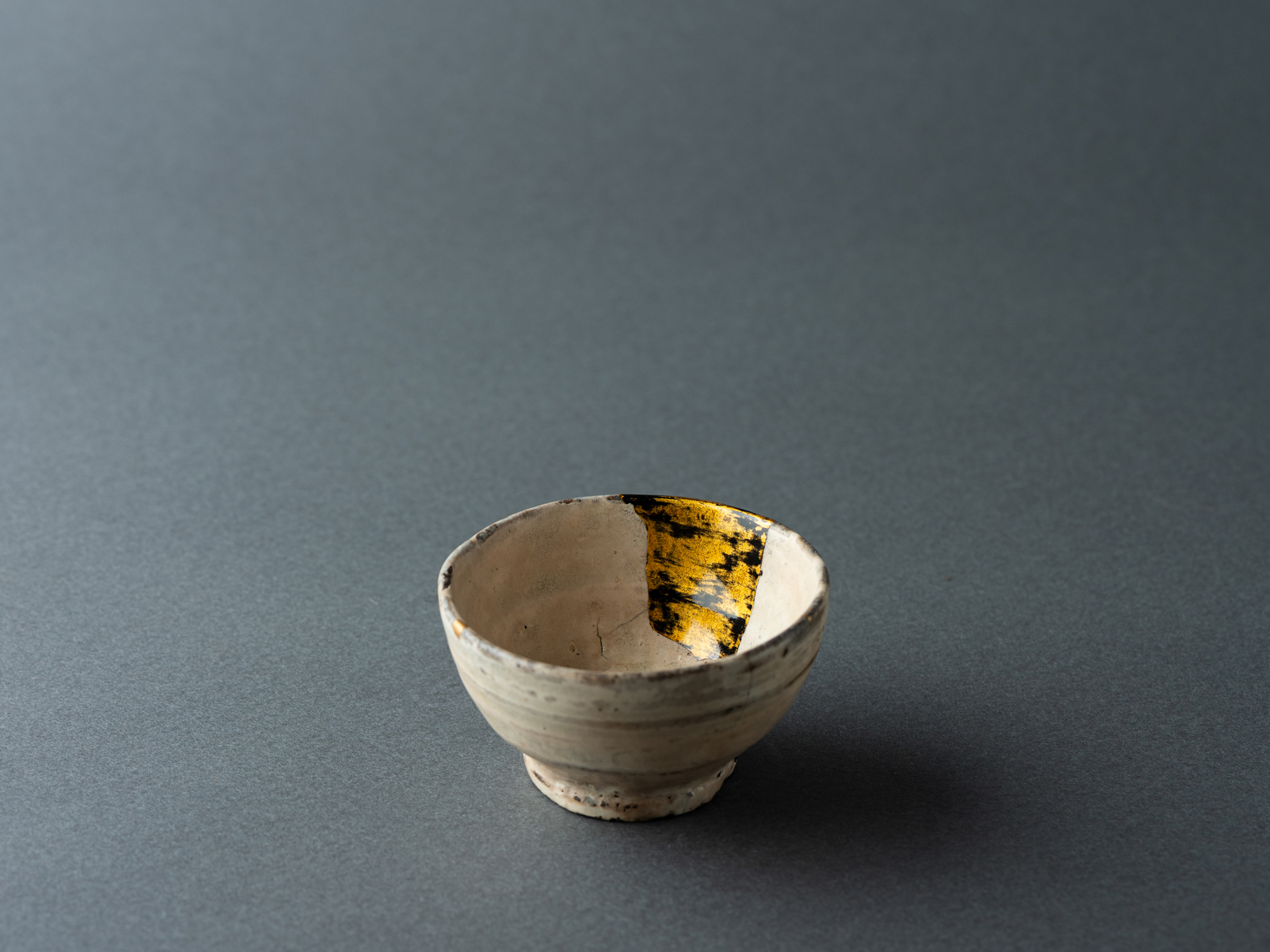
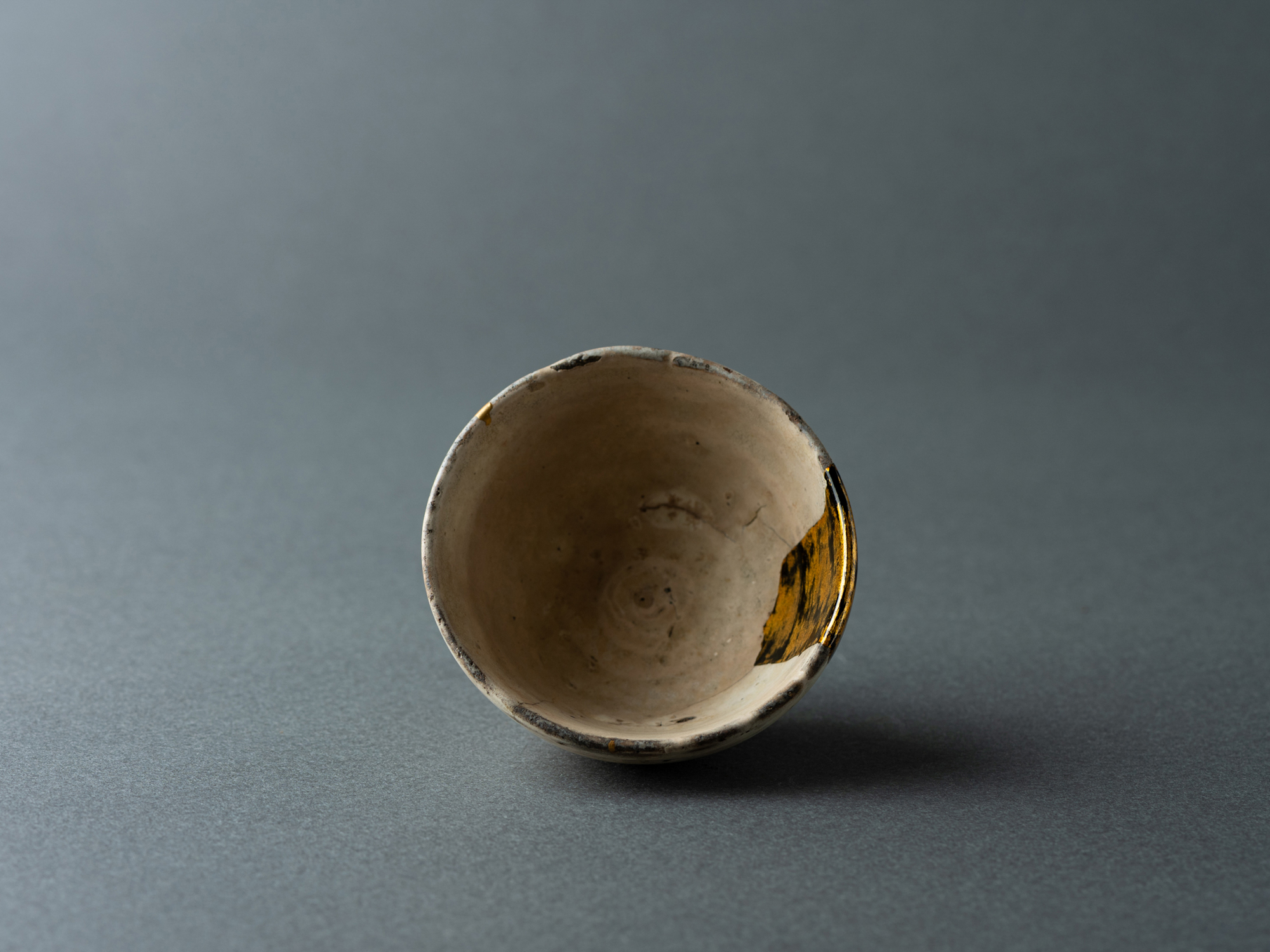
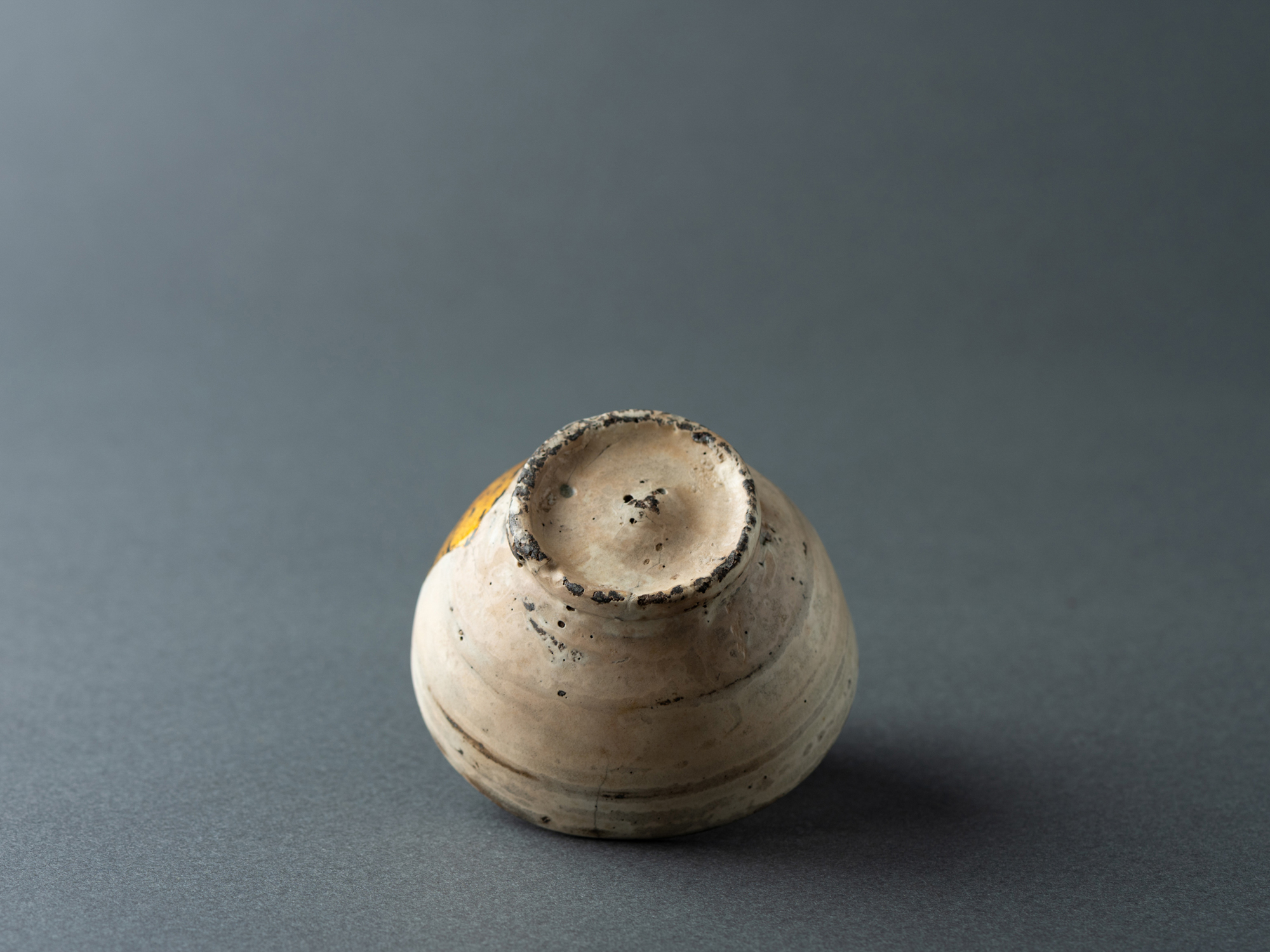
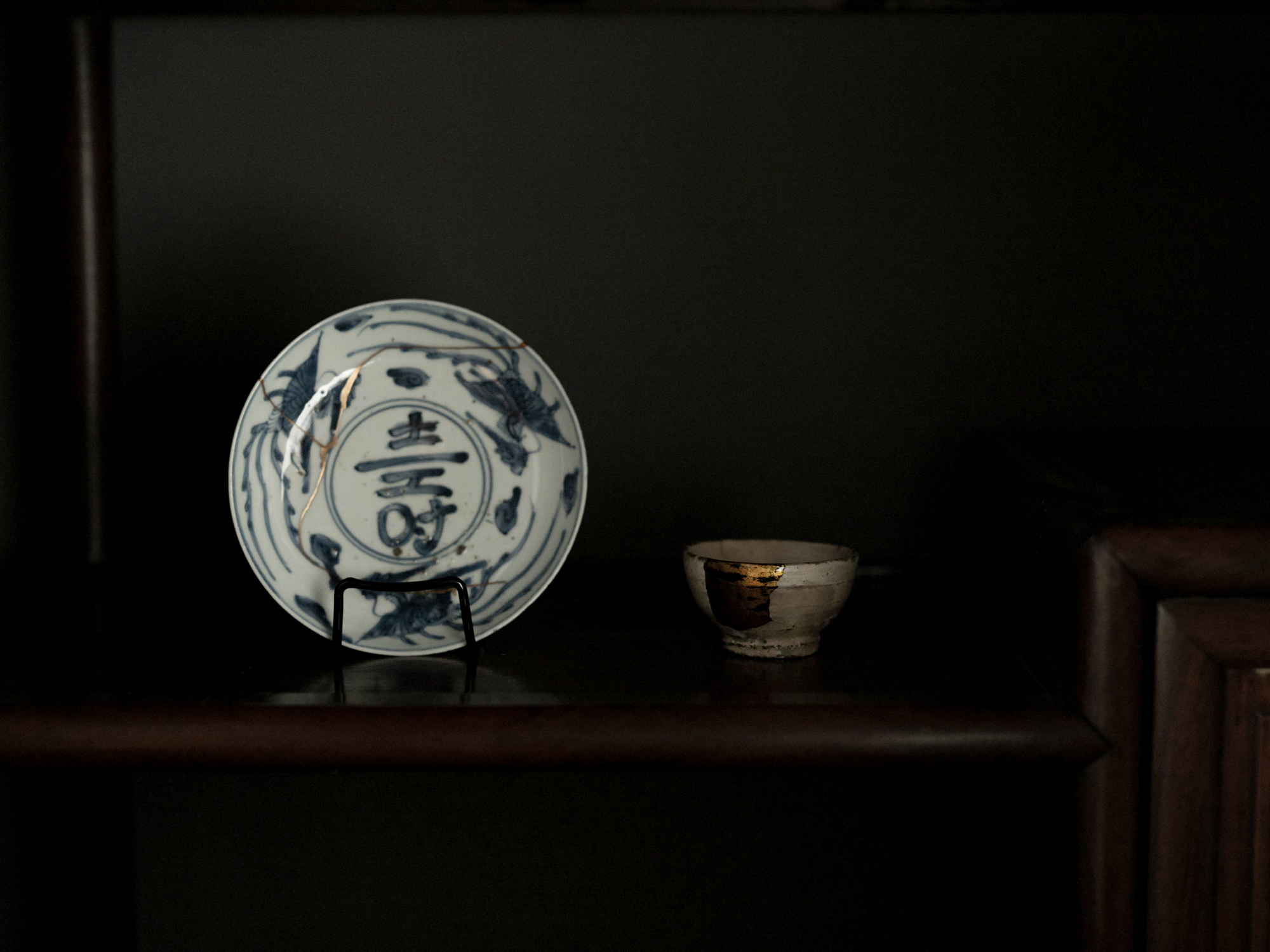
Joseon Buncheong Stoneware Small Bowl with White Slip, 16th Century, Korea
A Joseon-period buncheong stoneware small bowl covered with a white slip. In this type of ware, the darker clay body is coated with a layer of white slip before glazing, producing the soft, uneven surface known in Japan as Kohiki.
In Japan, bowls of this size are often appreciated as guinomi, relatively large sake cups. Kohiki examples are particularly valued for the way their surfaces can change through use.
Sake may gradually penetrate through pinholes or other small openings in the glaze and stain the white slip beneath, creating subtle variations in color and tone. For many collectors, part of the pleasure lies in watching these changes develop over time as the vessel is used.
Condition & Kintsugi Repair
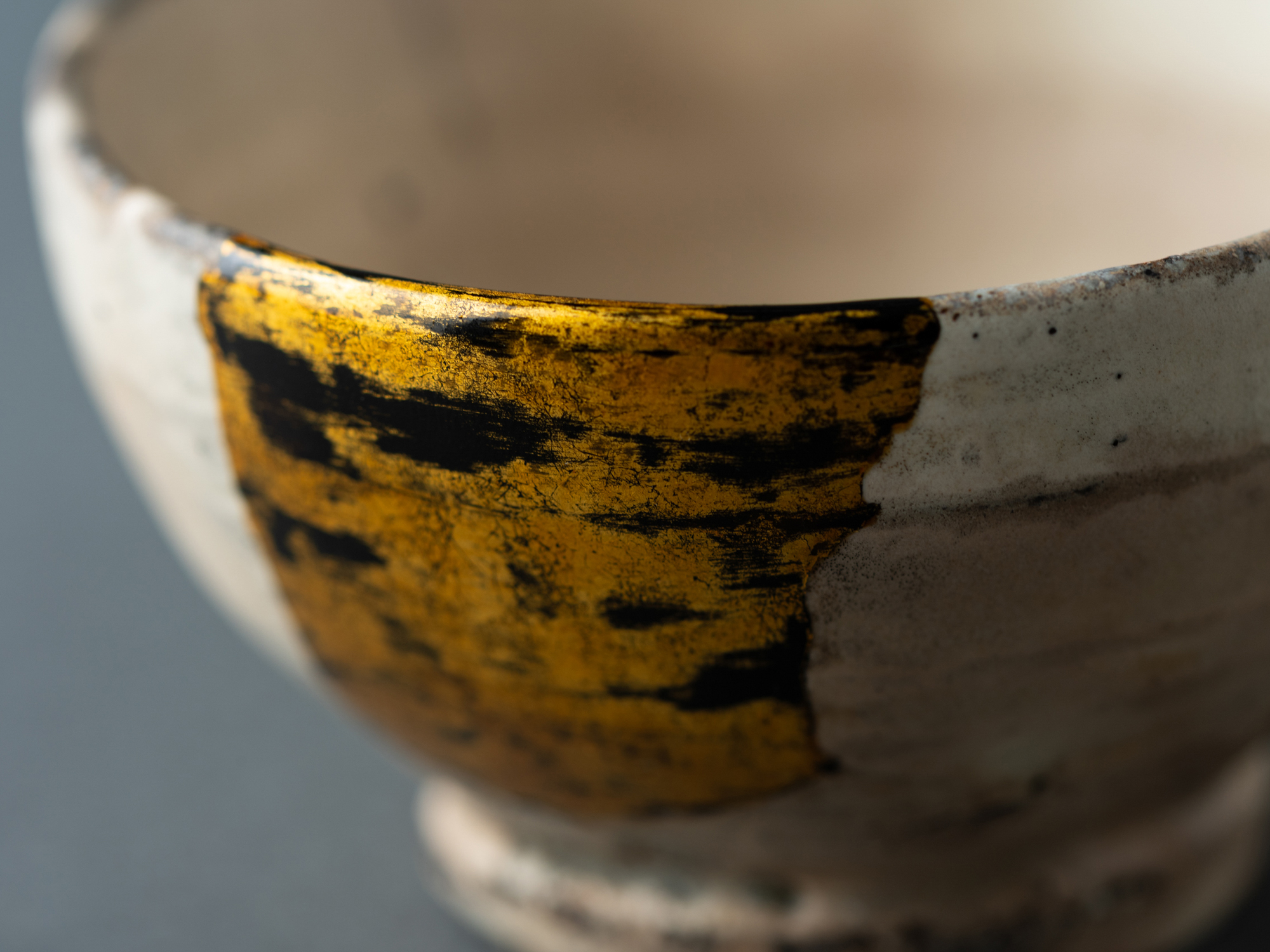
The vessel originally survived only as a fragment, with a substantial section completely missing. The lost area was reconstructed to restore the original form using layers of Japanese washi paper, urushi lacquer, and tonoko clay.
The reconstructed section was finished with black urushi, over which gold leaf was applied and then partially polished away. It was subsequently coated with a translucent yellow urushi known as nashiji-urushi, colored with gamboge. This produces a subdued, slightly aged tone intended to harmonize with the vessel’s weathered surface and visible throwing marks.
A small chip at the rim was repaired separately with urushi and finished with 23.2-karat gold powder.
The vessel is said to have been recovered from either the sea or a river. The entire surface has a matte, weathered appearance consistent with prolonged exposure to water. There is minor glaze loss at the rim and a pinhole measuring around 2 mm on the interior.
Dimensions
Diameter: 7.6–7.8 cm
Height: 4.4–4.6 cm
Foot diameter: 4.2 cm
Measurements are approximate.
Use & Care
Suitable for display as well as careful practical use as a sake cup.
If used, avoid microwave ovens, dishwashers, and prolonged soaking in water. Mild dishwashing detergent may be used. Wash gently by hand and dry thoroughly after use.
As described above, continued use may gradually alter the appearance of the white slip as liquids penetrate through pinholes in the glaze. In Japan, such gradual staining and softening of the surface has traditionally been appreciated as part of a vessel’s aging, an aesthetic closely related to wabi-sabi.
With long-term use as a sake cup, the currently matte surface may also gradually develop a softer sheen through repeated handling and use.
Price
1,800 USD
↳ Acquiring a Work & International Shipping
Works can be viewed in person at the YACCA studio in Fukuoka by appointment.
Item No: VS-005