
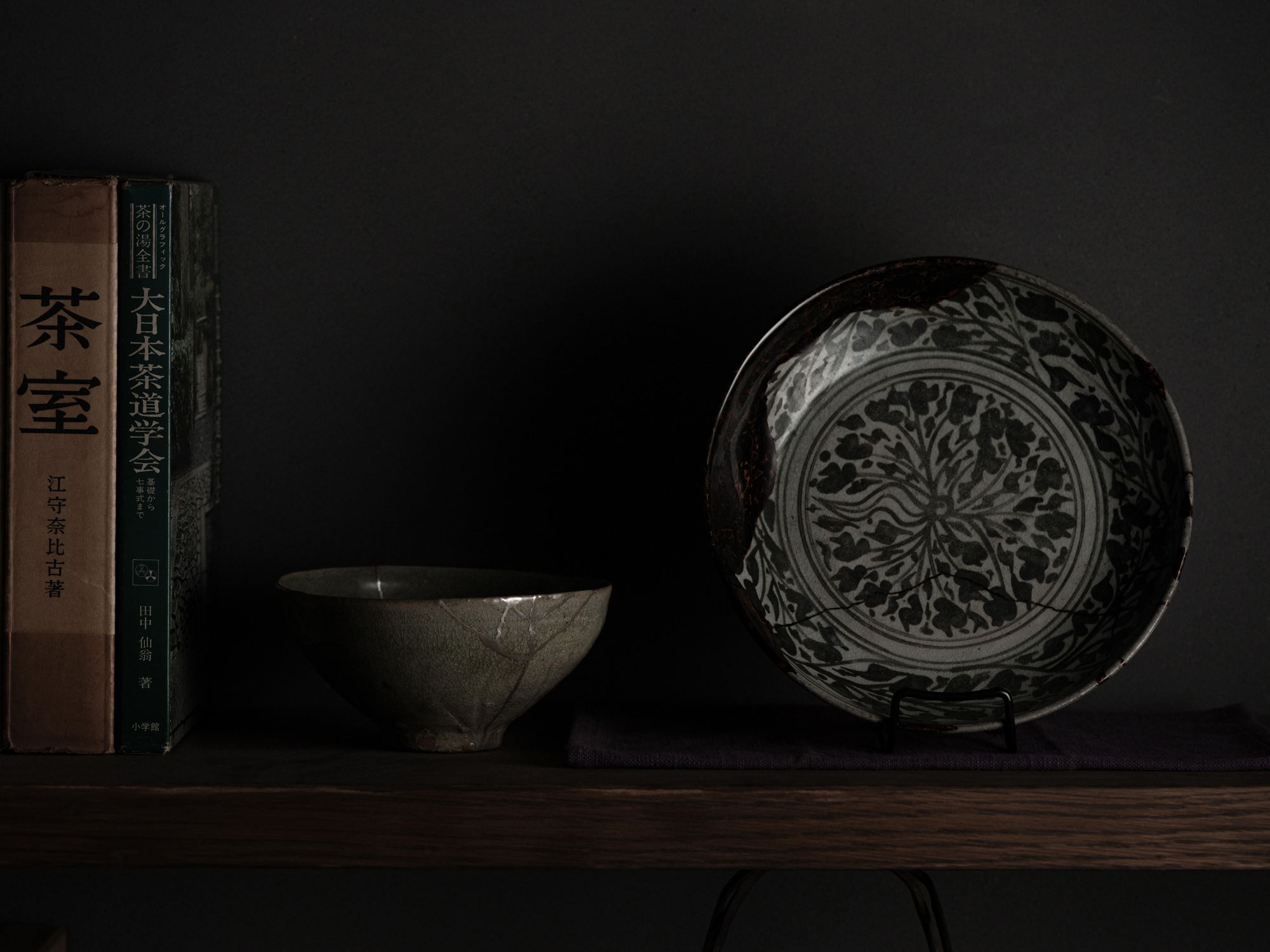
Goryeo Celadon Bowl with Incised Lotus-Petal Design, 12th–13th Century, Korea
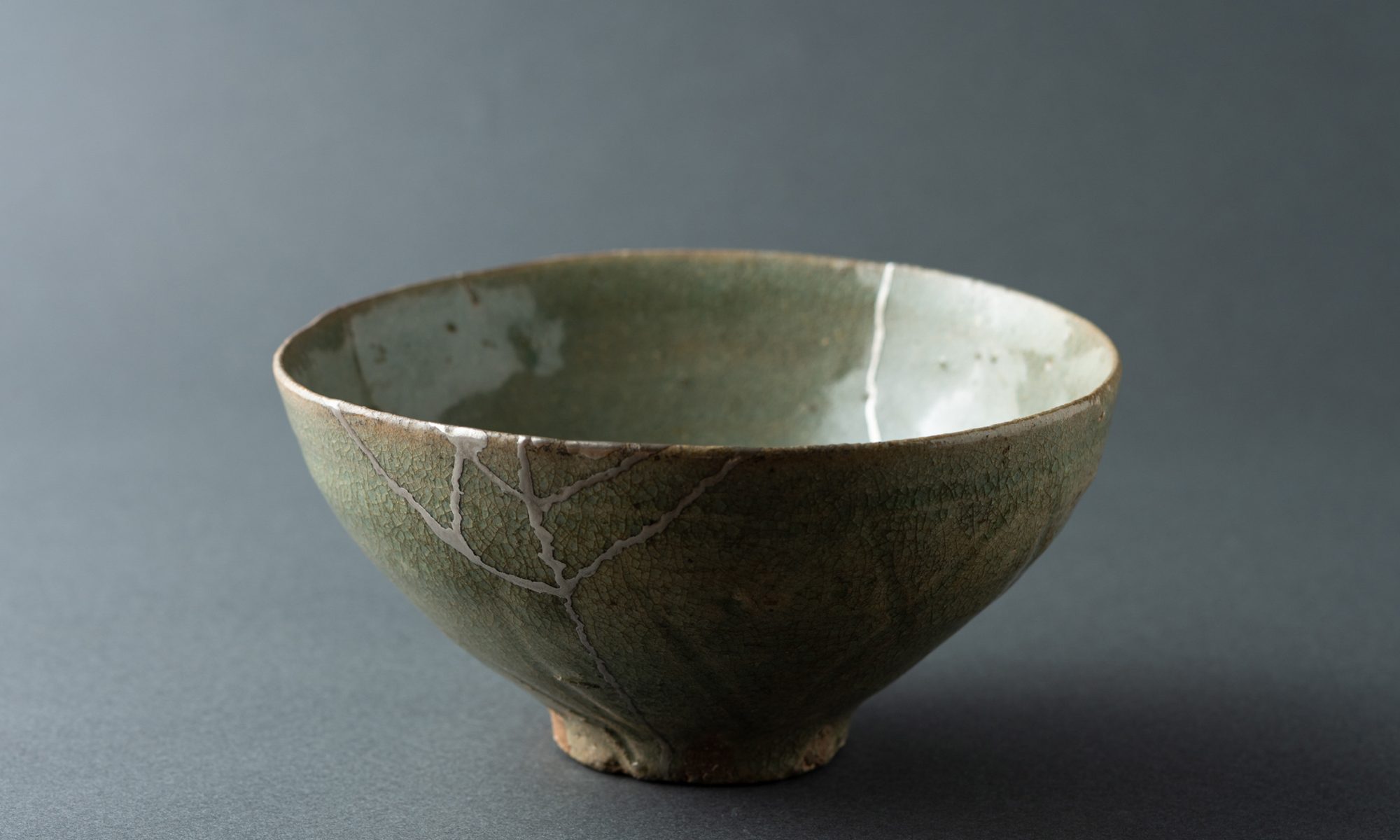
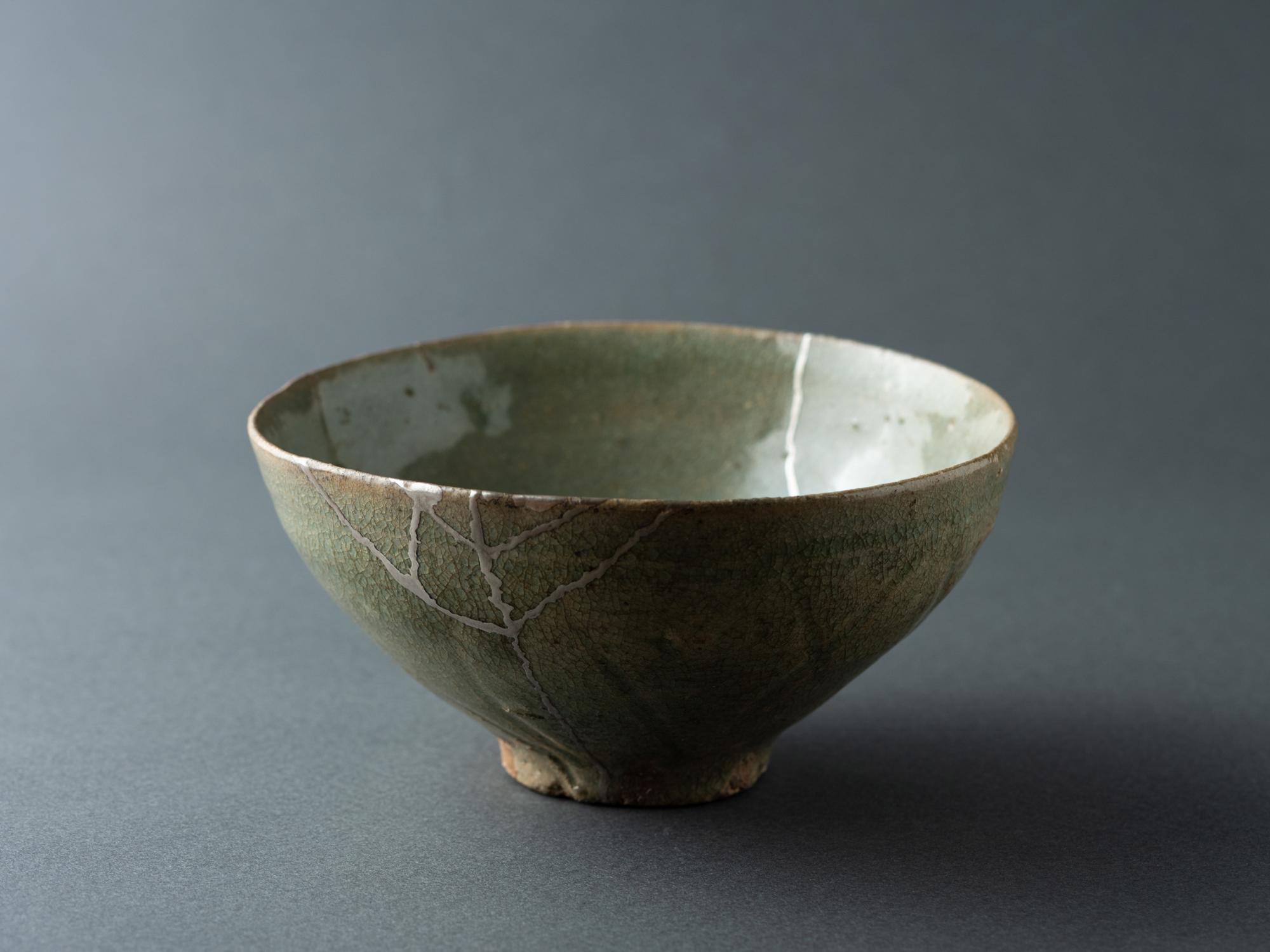
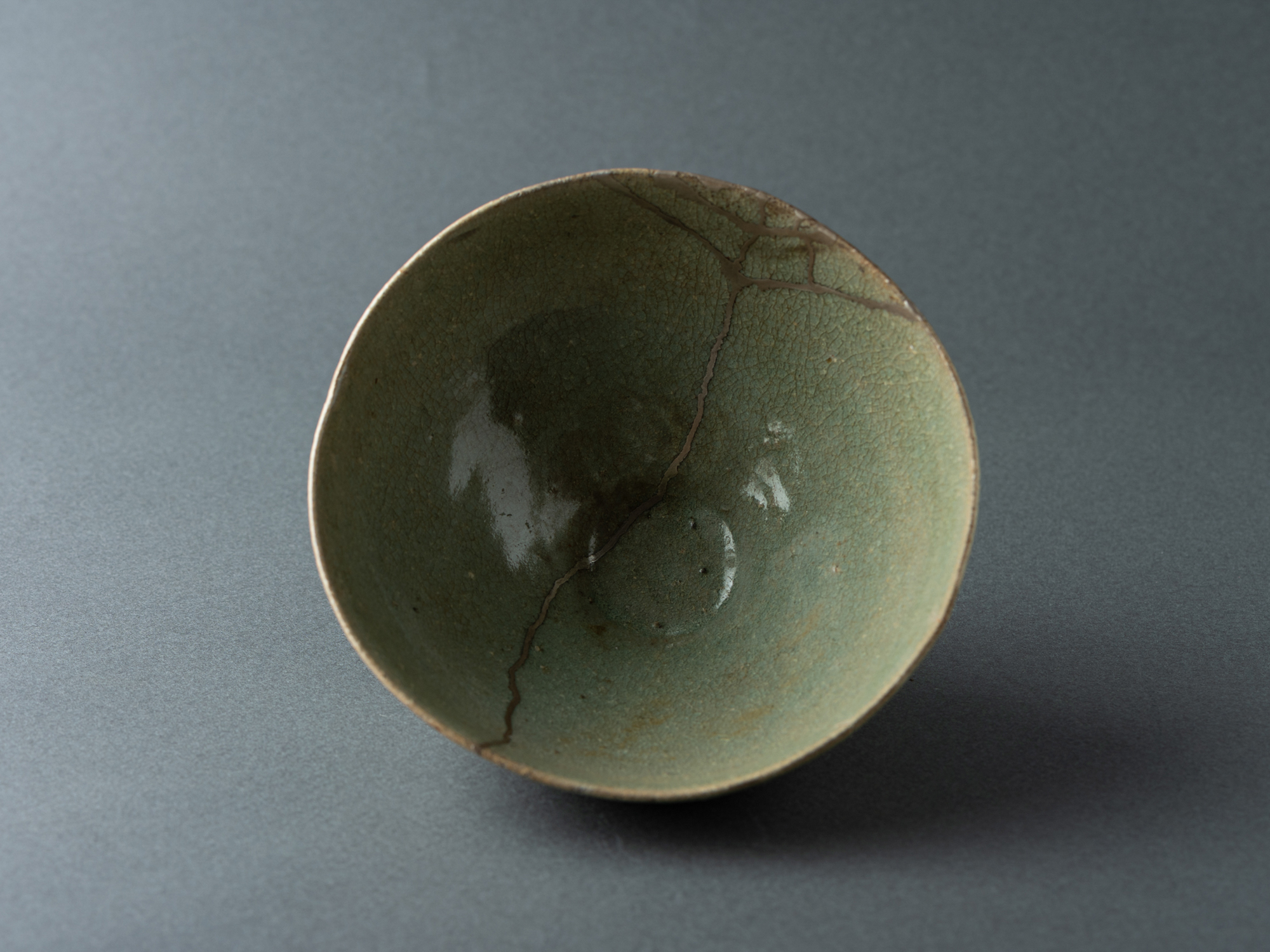
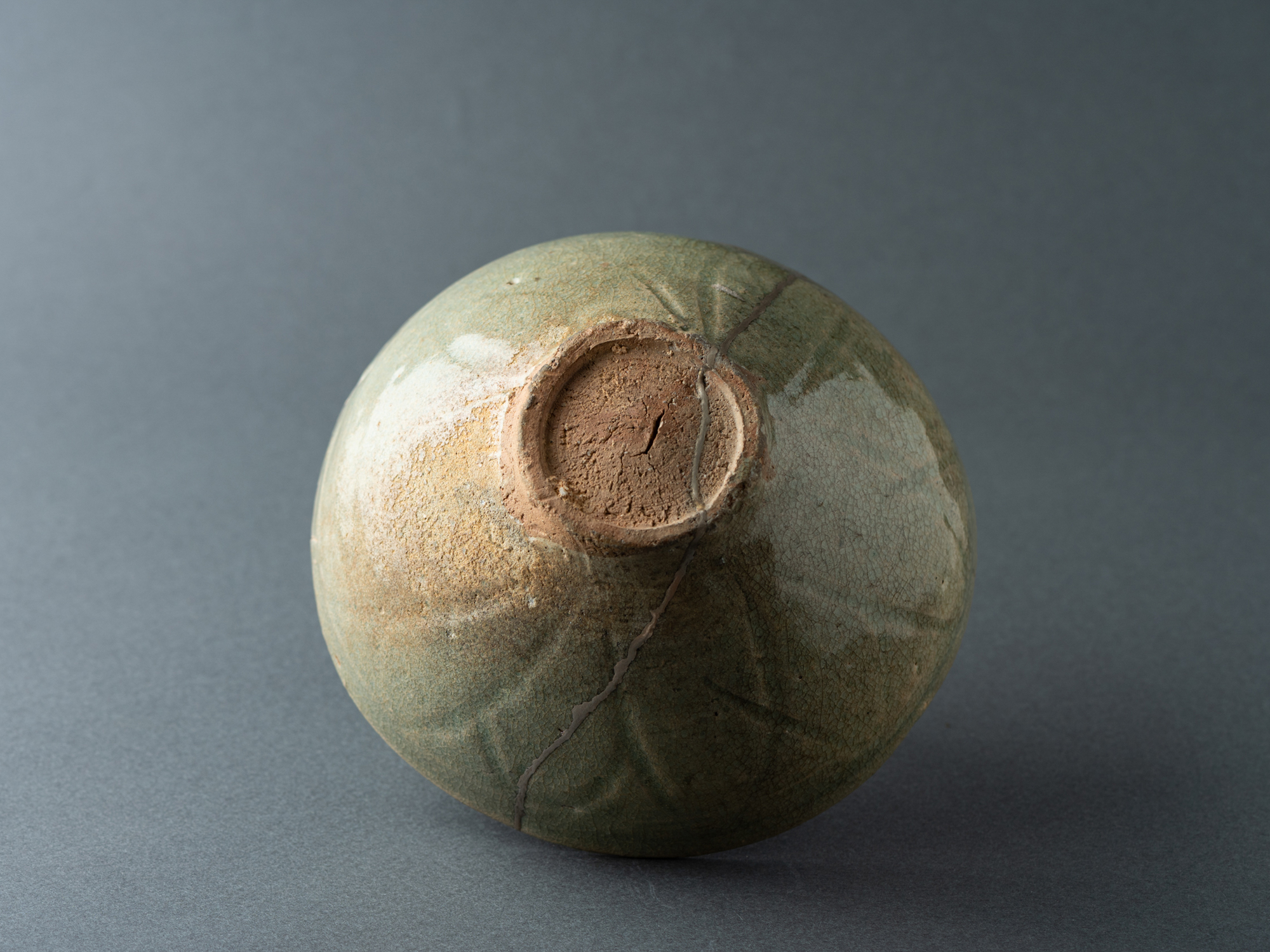
A Goryeo celadon bowl decorated with an incised lotus-petal design. Compared with more finely potted examples of Goryeo celadon, the form and decoration are more relaxed, suggesting a vessel made with practical use in mind rather than as a particularly refined piece.
Its more utilitarian character suggests a vessel that was closer to everyday life, giving the bowl a quiet warmth and immediacy.
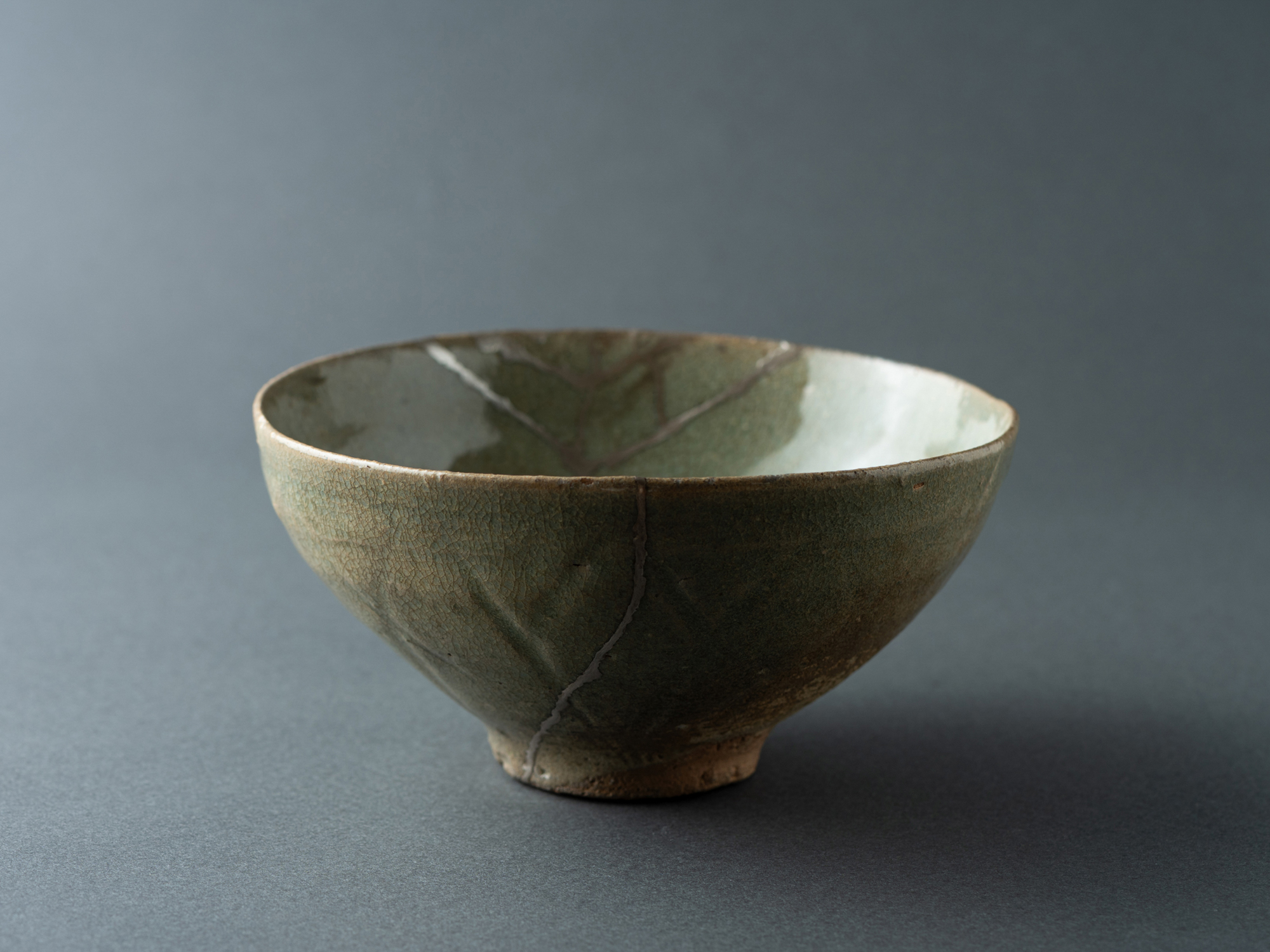
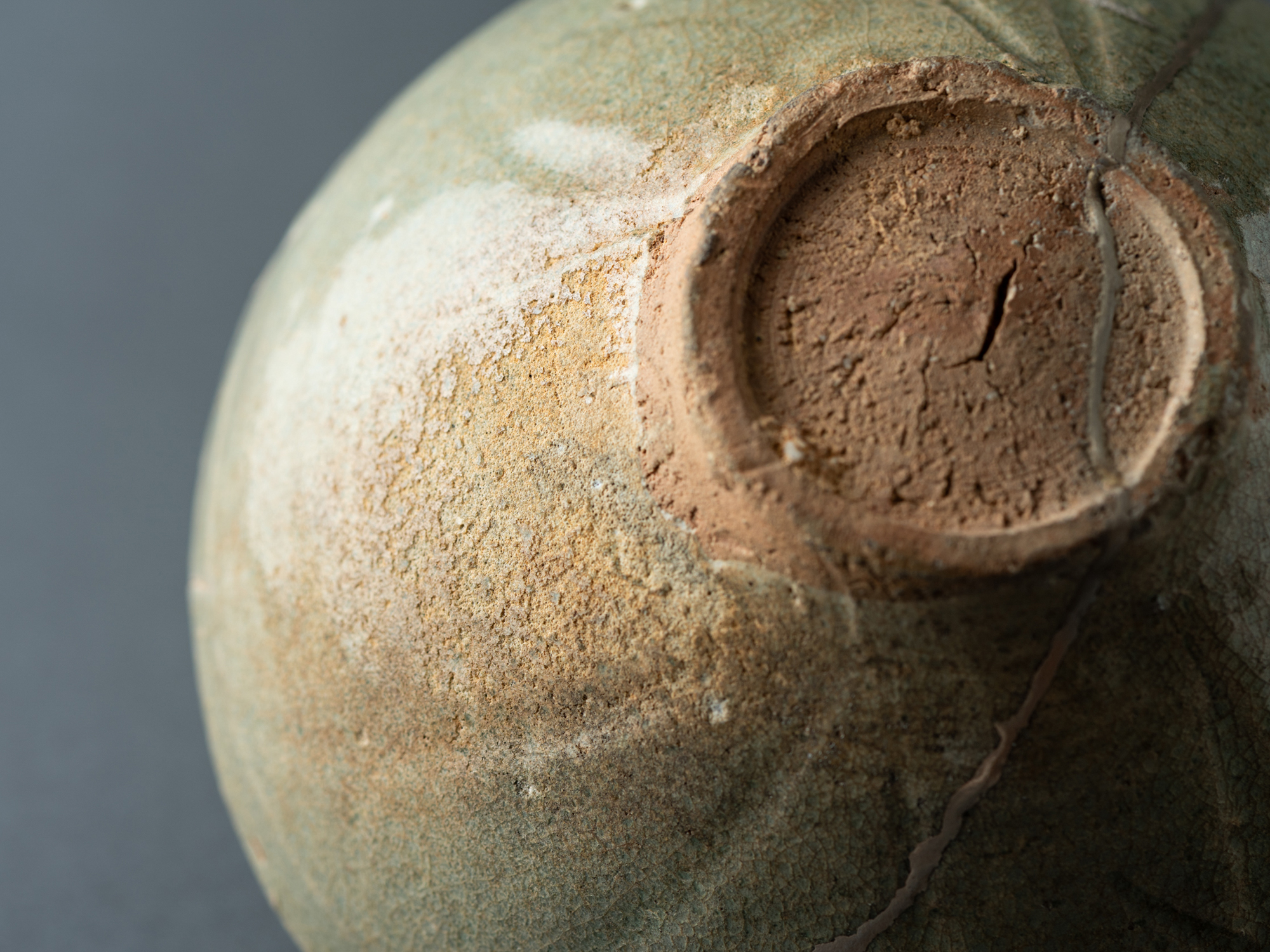
The rim is slightly irregular rather than perfectly circular, and the overall profile has a softly formed, unforced character. The body is moderately substantial without being heavy, and the area inside the foot ring is left unglazed.
Condition & Kintsugi Repair
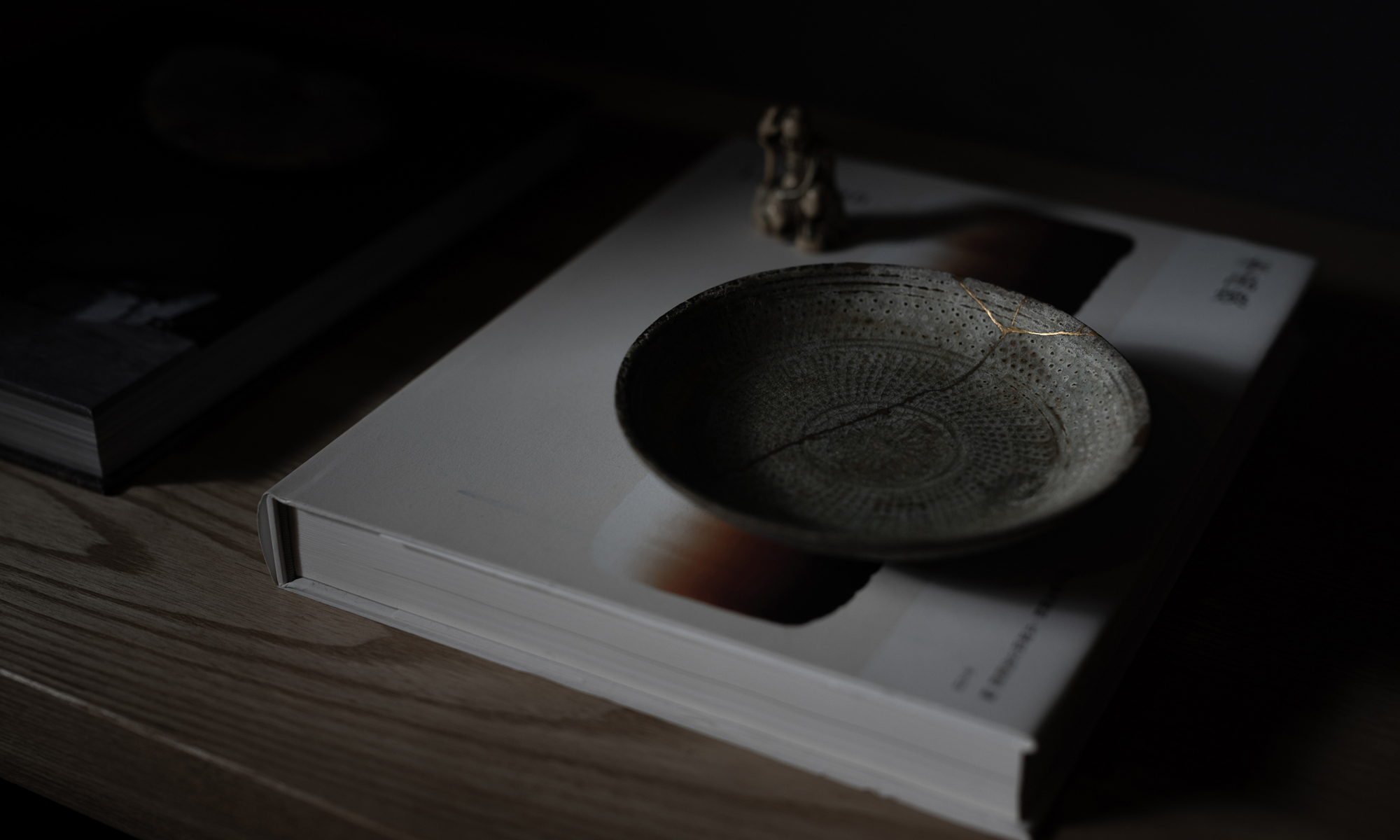
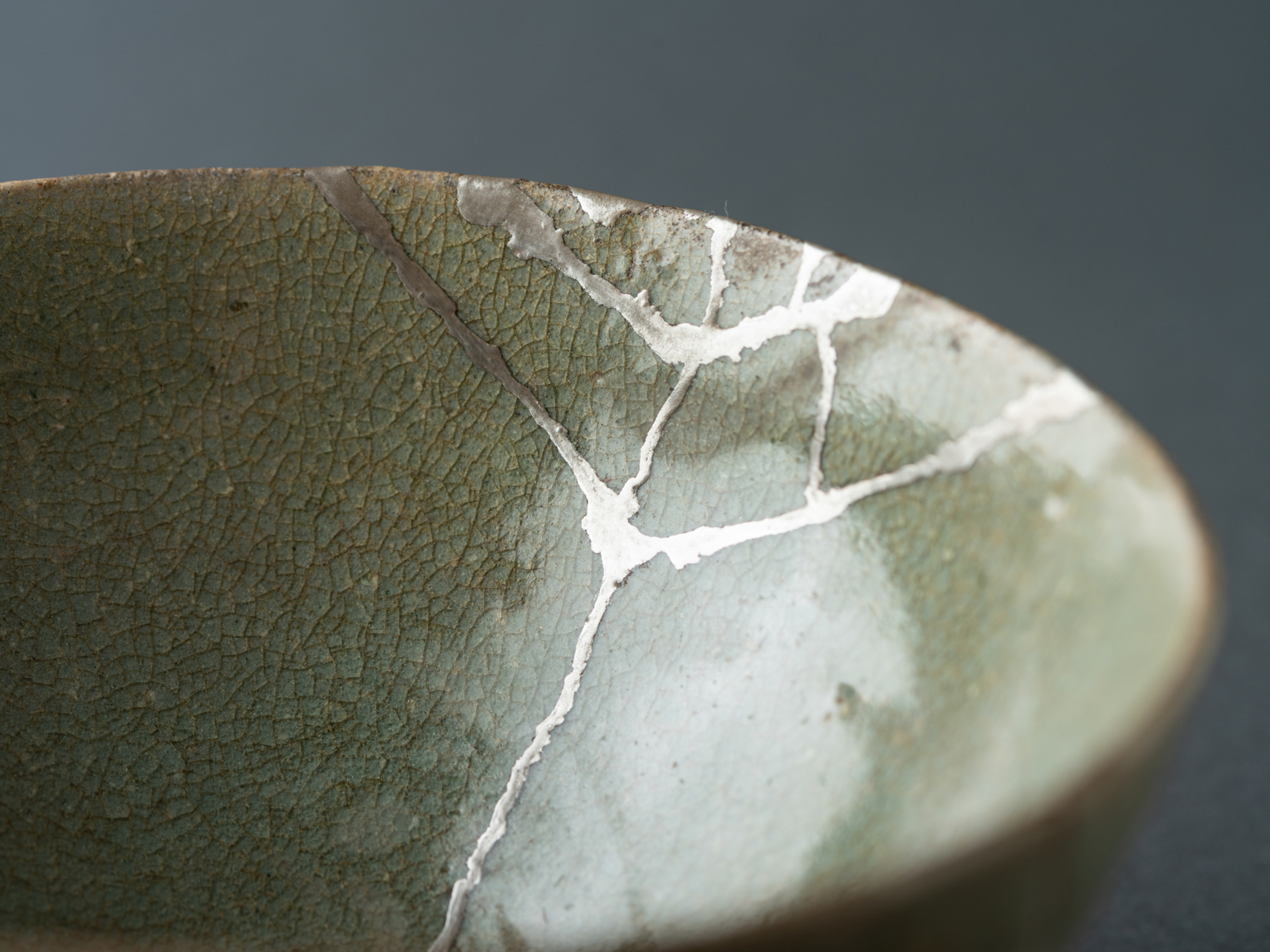
The bowl had been broken into eight pieces, including several small fragments. It was reassembled using natural urushi lacquer, and the repaired areas were finished with silver.
Silver was chosen rather than gold to complement the celadon glaze and to avoid overpowering the original character of the vessel.
A historical precedent can also be found in the collection of the Fitzwilliam Museum: a 12th-century Goryeo celadon maebyeong (OC.90-1946), in which two losses at the rim were repaired with silver powder over red lacquer.
One area of the exterior shows pronounced weathering of the glaze, together with adhering earthen deposits that could not be removed. These features are consistent with prolonged burial and suggest that the bowl may have been excavated.
Two linear splits in the glaze on the exterior, approximately 2 cm and 1.5 cm in length, slightly expose the ceramic body beneath. They appear to have formed during firing and do not extend into the body of the vessel, so they have been left unrepaired.
The surface also shows pinholes and localized changes in glaze color, likely resulting from firing and long-term contact with the burial environment.
Dimensions
Diameter: 15.8–16.2 cm
Height: 7.8–8.2 cm
Foot diameter: 5.6–5.8 cm
Measurements are approximate.
Use & Care
Primarily recommended for display. Although the bowl is structurally suitable for careful practical use, areas of weathered glaze and adhering earthen deposits remain on the surface.
If used, avoid microwave ovens, dishwashers, and prolonged soaking in water. Mild dishwashing detergent may be used. Wash gently by hand and dry thoroughly after use.
The silver finish will naturally tarnish over time, gradually darkening and eventually approaching a near-black tone. As the brightness of the silver softens, the repair develops a quieter, more wabi character. We recommend enjoying this gradual change as part of the vessel’s aging.
If preferred, the silver can be brightened with a silver polishing cloth. Frequent or excessive polishing should be avoided, however, as it may gradually wear away the silver layer and expose the urushi lacquer beneath.
Price
2,800 USD
↳ Acquiring a Work & International Shipping
Works can be viewed in person at the YACCA studio in Fukuoka by appointment.
Item No: VS-002