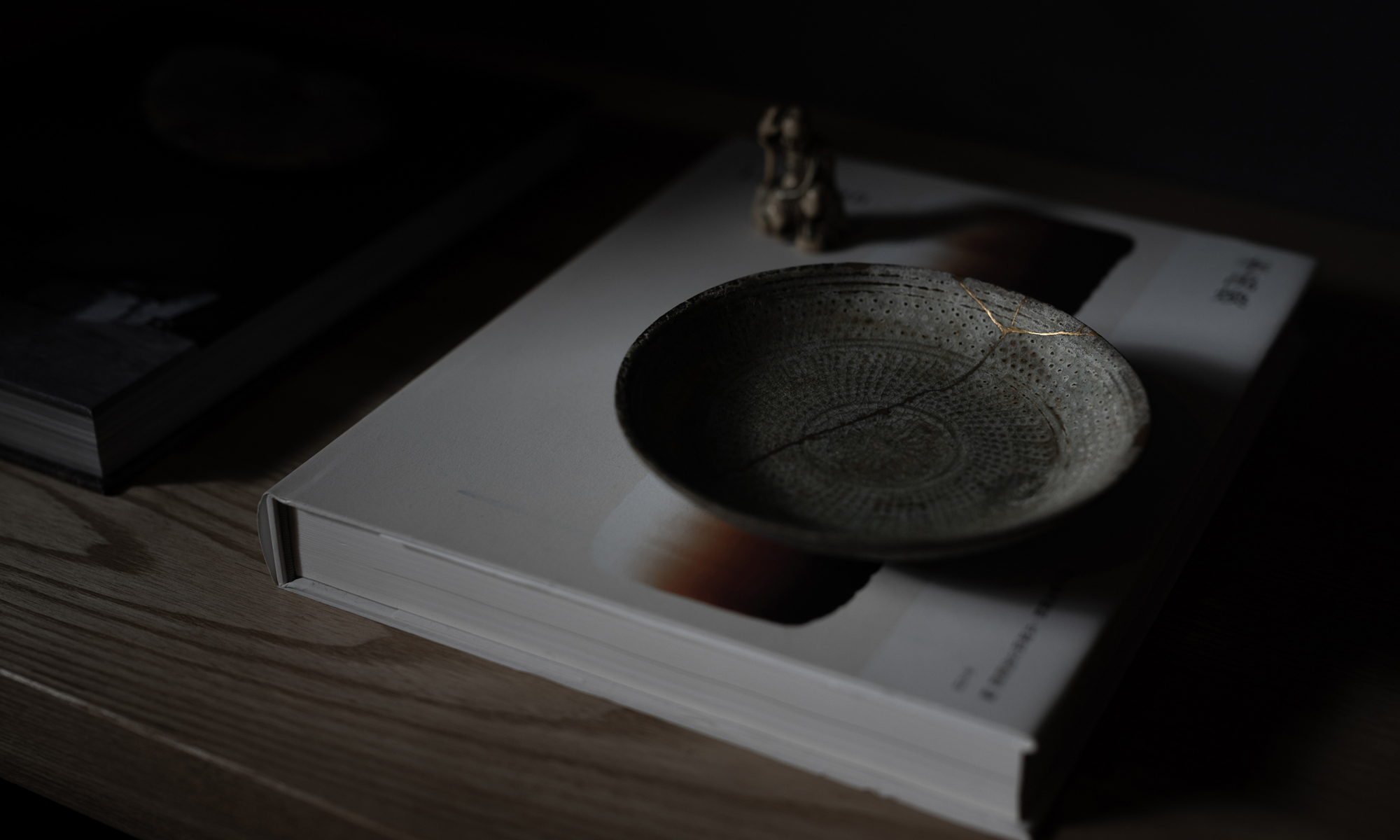

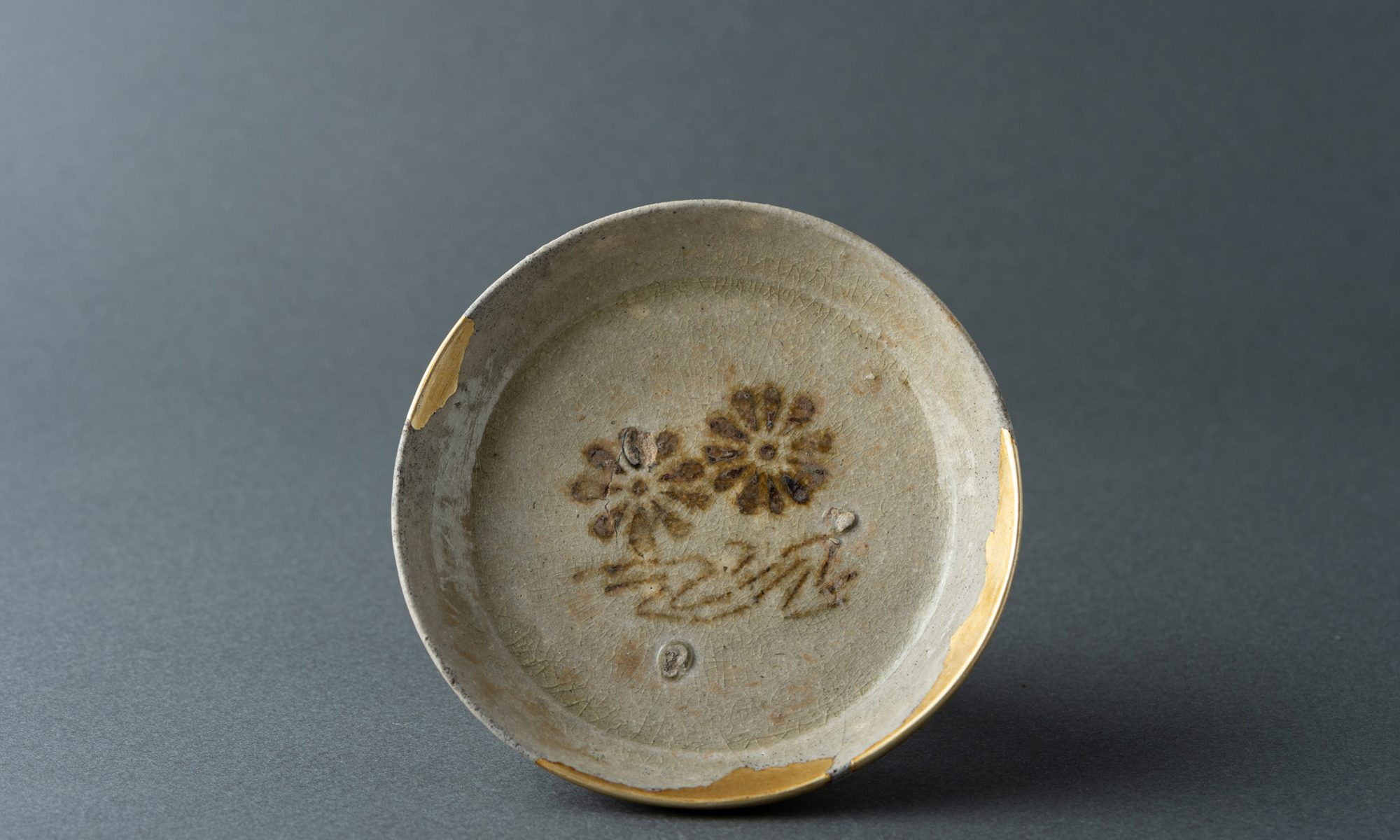
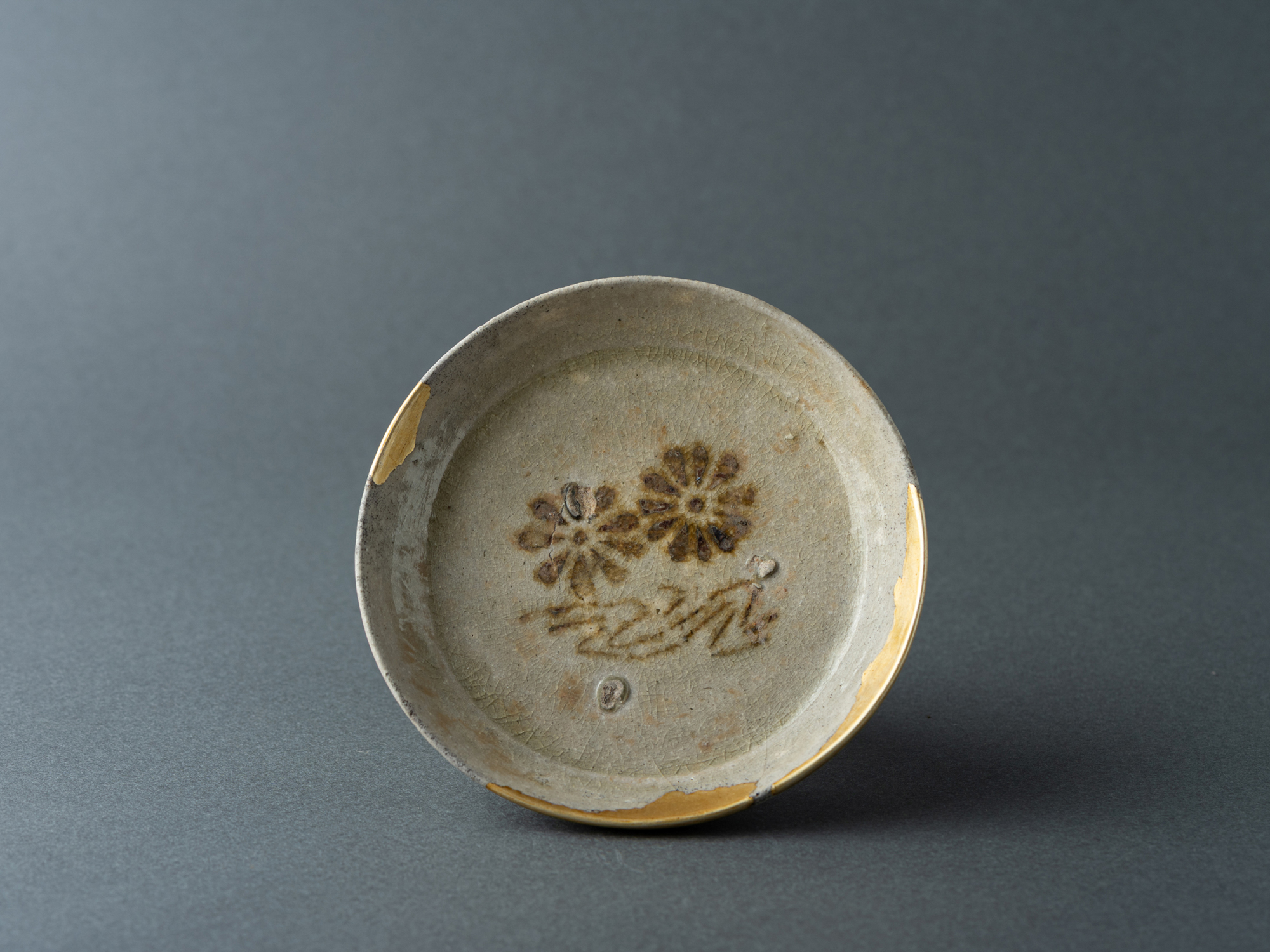
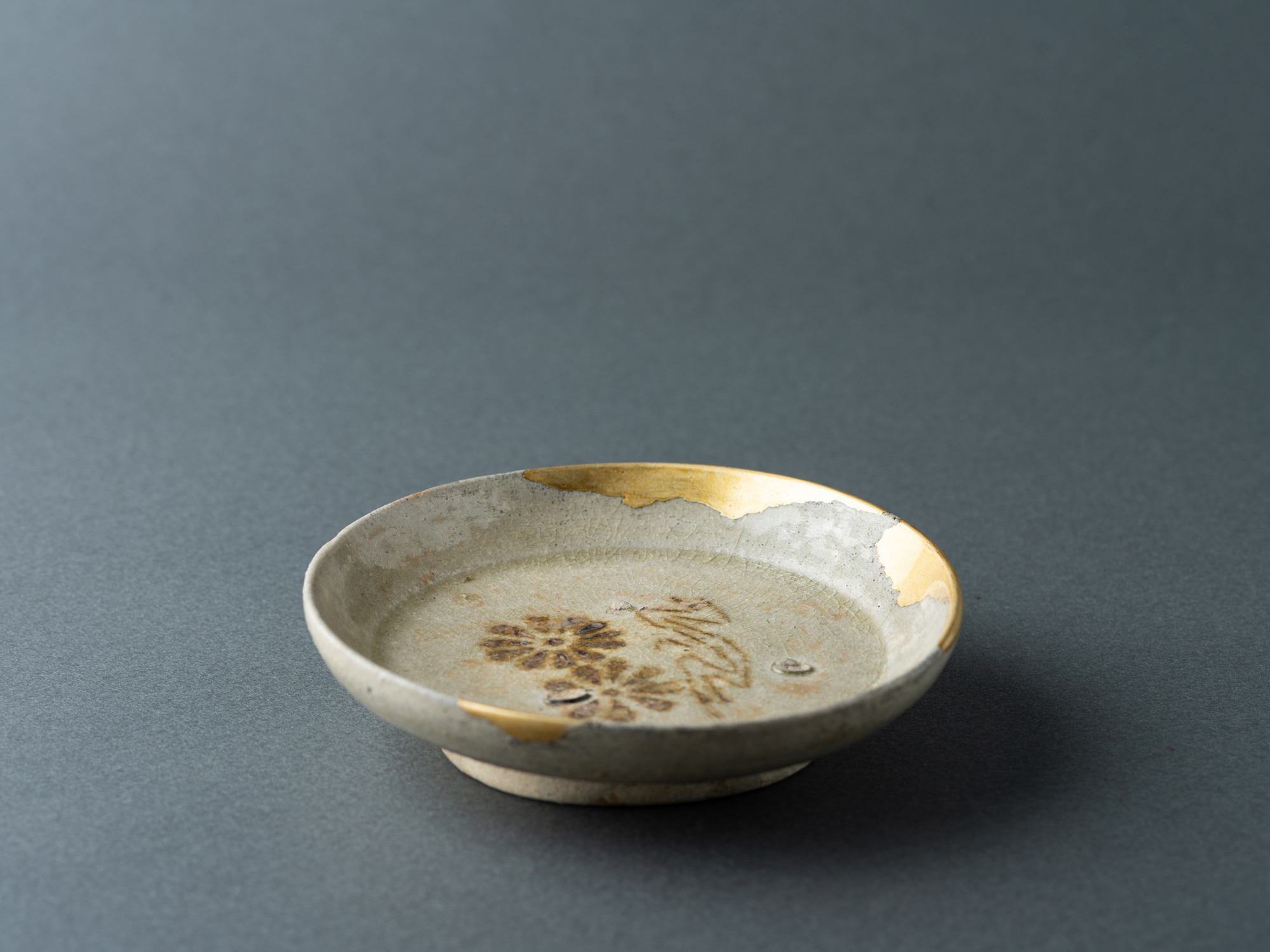
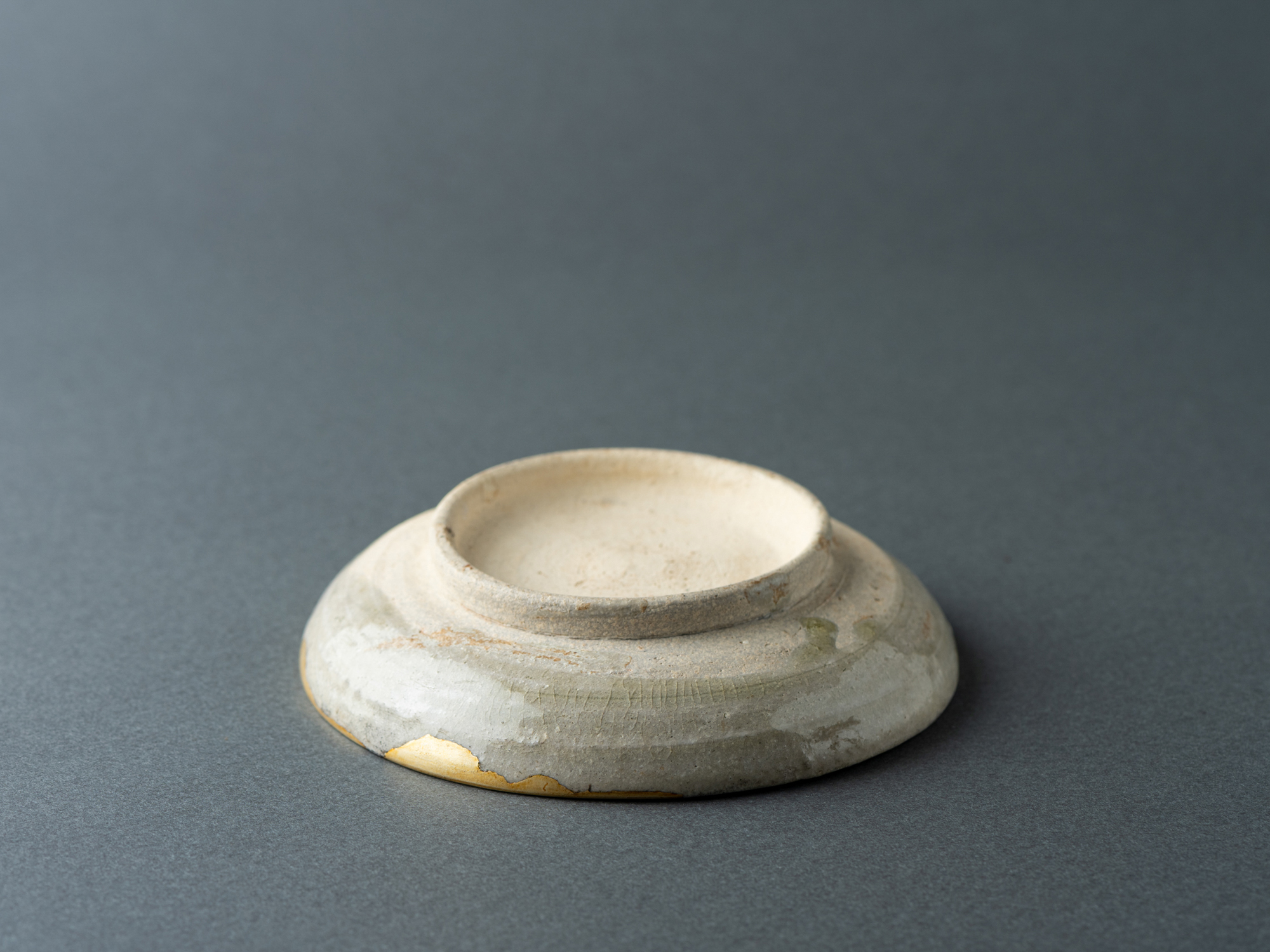
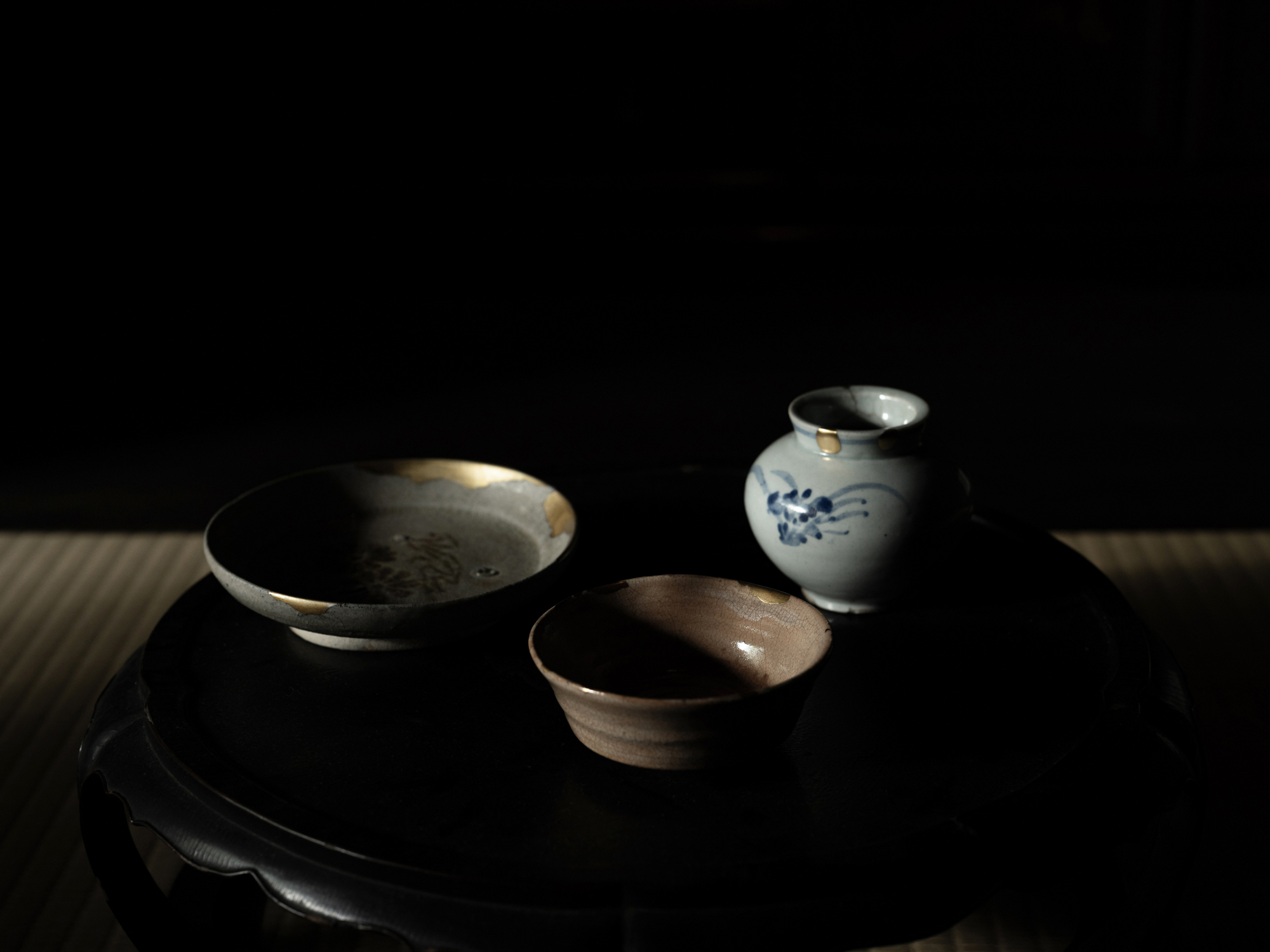
Edo Seto Ware Dish with Ash Glaze and Stenciled Floral Design, Late 17th–Early 18th Century, Japan
A Seto ware dish from the late 17th to early 18th century, covered with an ash glaze and decorated with an iron-painted stenciled design.
Seto is one of Japan’s Six Ancient Kilns and has been a major center of ceramic production since the medieval period. Over the centuries, its potters adapted to changing tastes and uses, producing a wide range of wares for both everyday life and more formal settings.
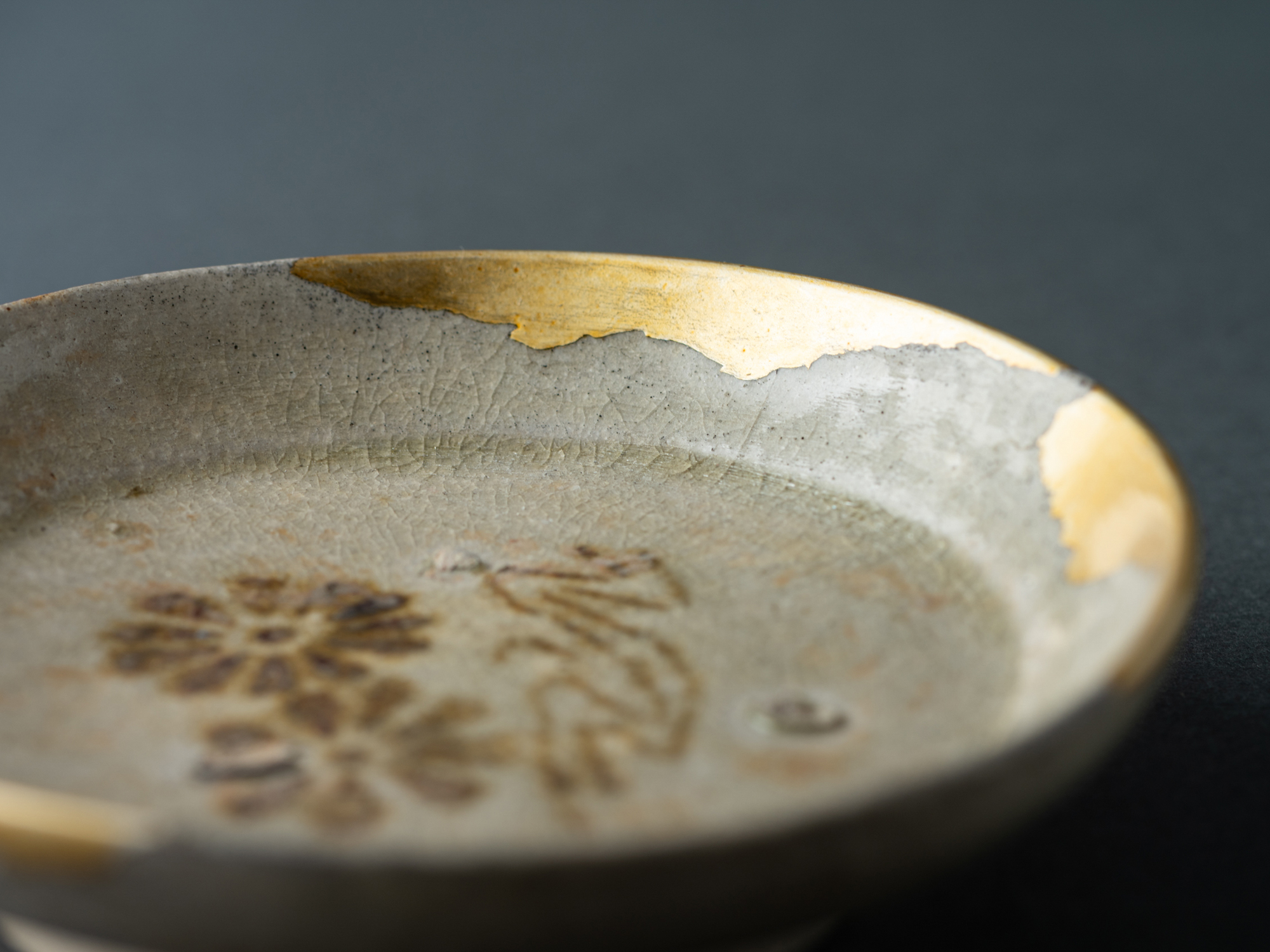
During the Edo period, Seto potters also adopted a variety of decorative techniques, including surie, a form of stencil decoration. In this method, a cut-paper stencil is placed against the surface of the vessel and pigment is applied through the openings, allowing repeated motifs to be transferred efficiently and with a distinctive graphic quality.
Surie decoration was used for a variety of motifs, including floral, geometric, and auspicious designs. The pattern appears to depict two stylized chrysanthemums accompanied by simplified plant motifs.
Condition & Kintsugi Repair
The dish was acquired as an excavated fragment, with three substantial areas missing around the rim. These losses were reconstructed using natural urushi lacquer and tonoko clay.
Although the restored areas may initially appear to be gold, they were finished using a technique known as byakudan-nuri. Silver powder was first applied, then covered with a translucent yellow urushi known as nashiji-urushi, colored with gamboge. The result is a soft, pale-gold tone with a more subdued character than actual gold.
As an excavated object, the dish shows general surface weathering and light soil staining. However, areas where the ash glaze has pooled into a pale green tone remain well preserved, retaining the distinctive surface character associated with old Seto ware.
Dimensions
Diameter: 12.7–12.9 cm
Height: 2.7–3.0 cm
Foot diameter: 7.6–7.8 cm
Measurements are approximate.
Use & Care
Suitable for display and structurally sound for careful practical use. However, because the surface retains light soil staining from burial, we recommend displaying the dish rather than using it regularly.
If used, avoid microwave ovens, dishwashers, and prolonged soaking in water. Mild dishwashing detergent may be used. Wash gently by hand and dry thoroughly after use.
Price
1,200 USD
↳ Acquiring a Work & International Shipping
Works can be viewed in person at the YACCA studio in Fukuoka by appointment.
Item No: VS-009