
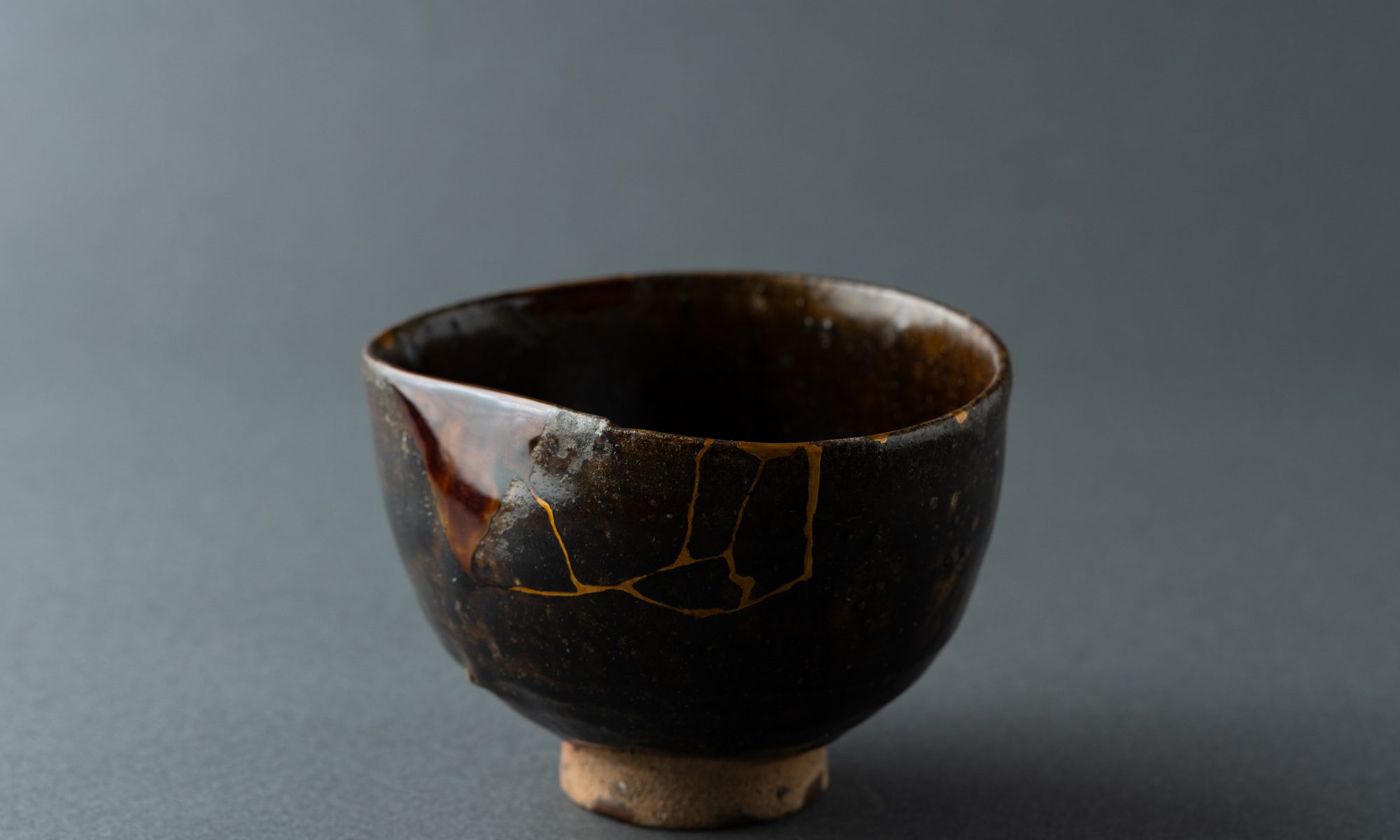
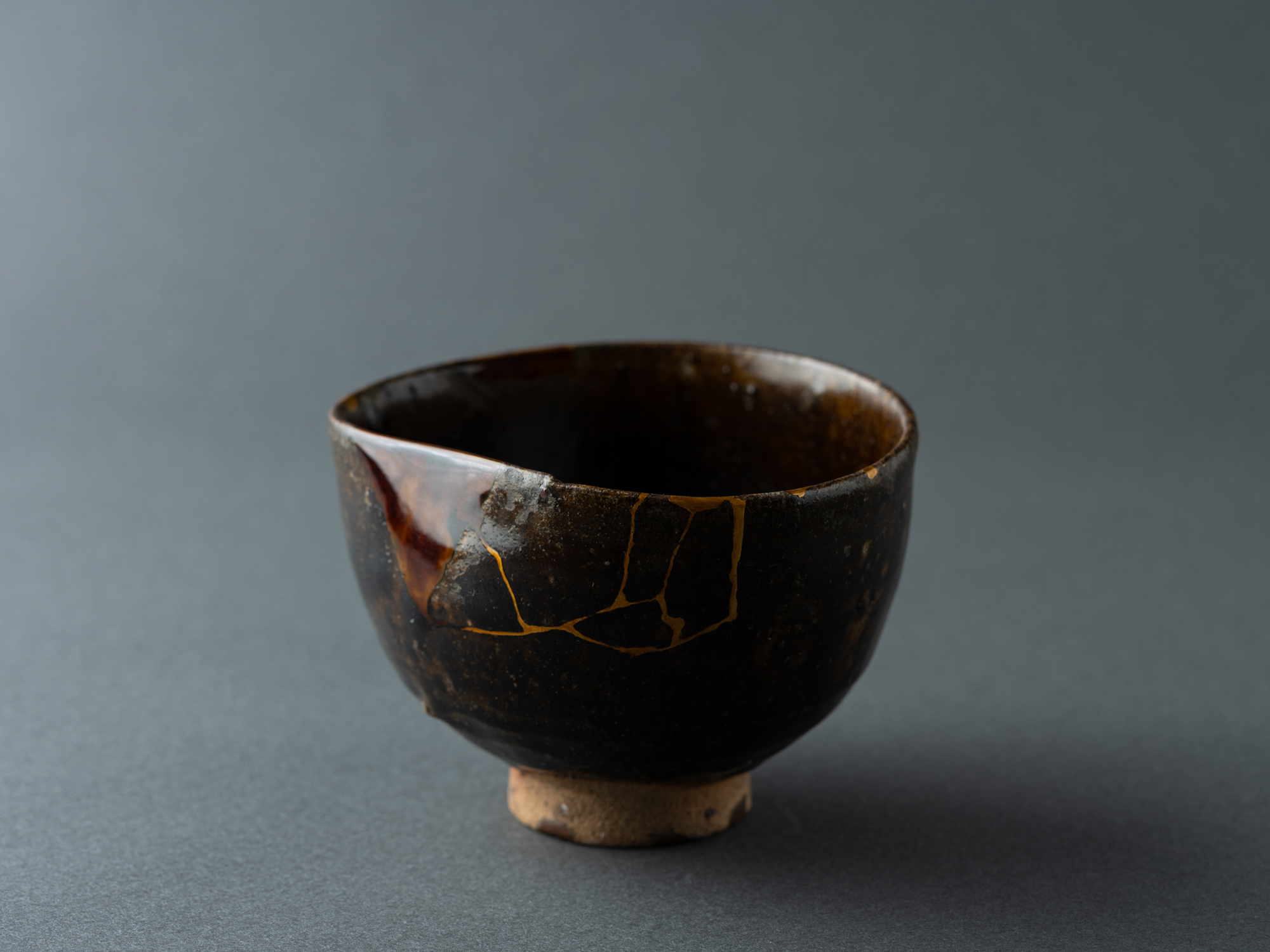
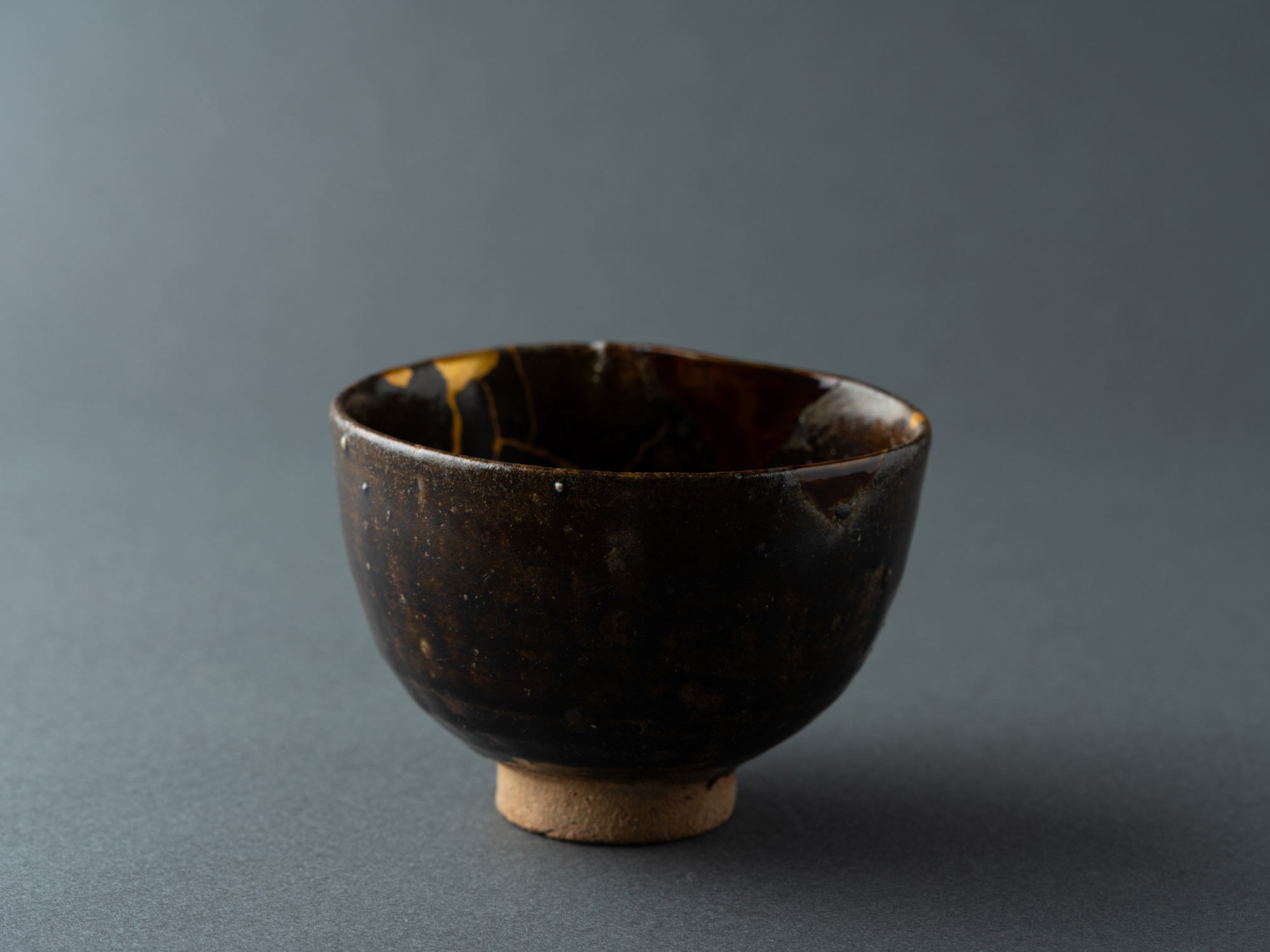
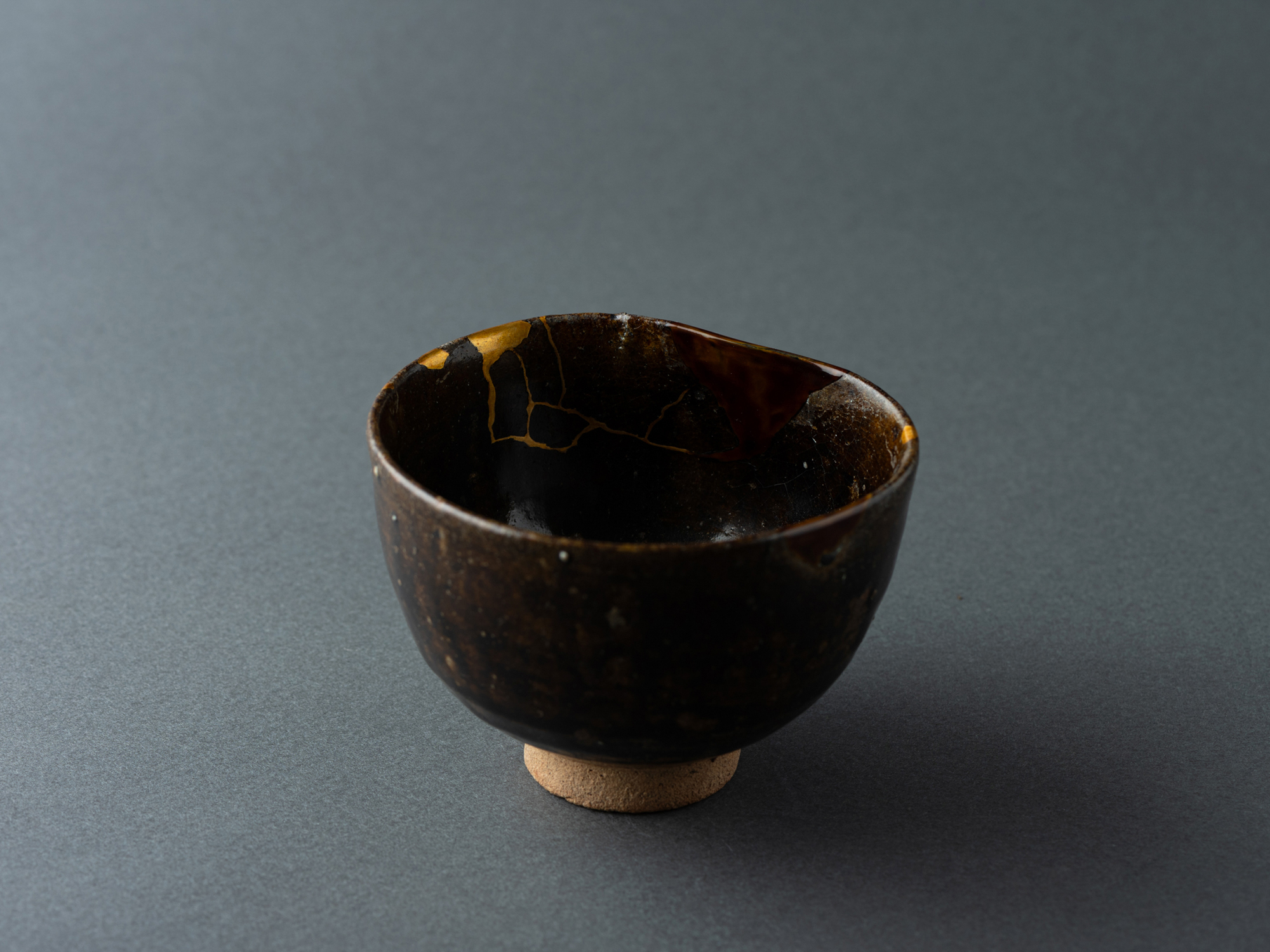
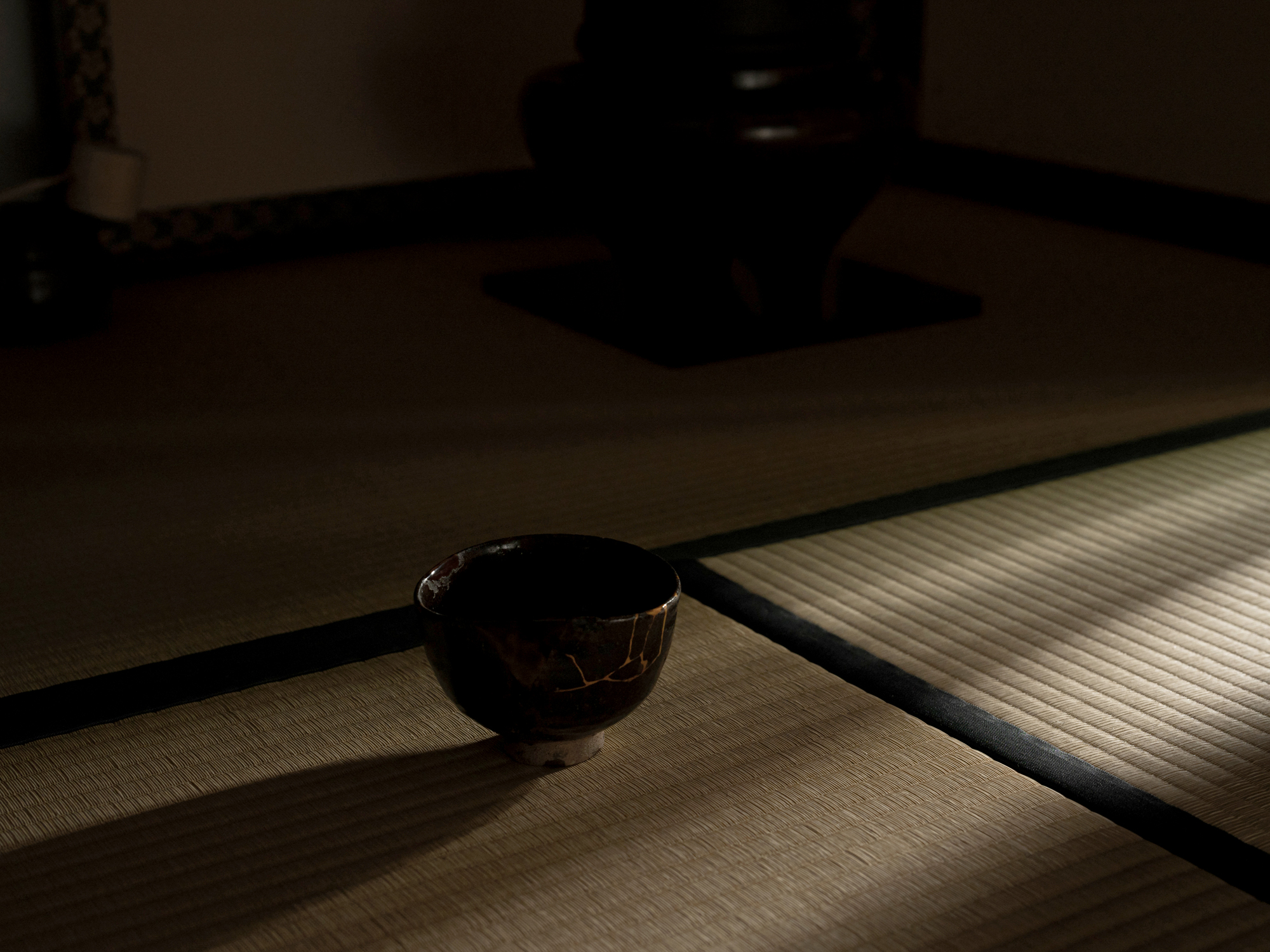
Early Edo Black Karatsu Tea Bowl, Late 17th Century, Japan
This bowl belongs to a slightly later phase of Karatsu production than the highly prized Momoyama-period wares. Although such later examples generally do not command the same level of appreciation as early Karatsu, they retain much of the material character and expressive quality associated with the tradition.
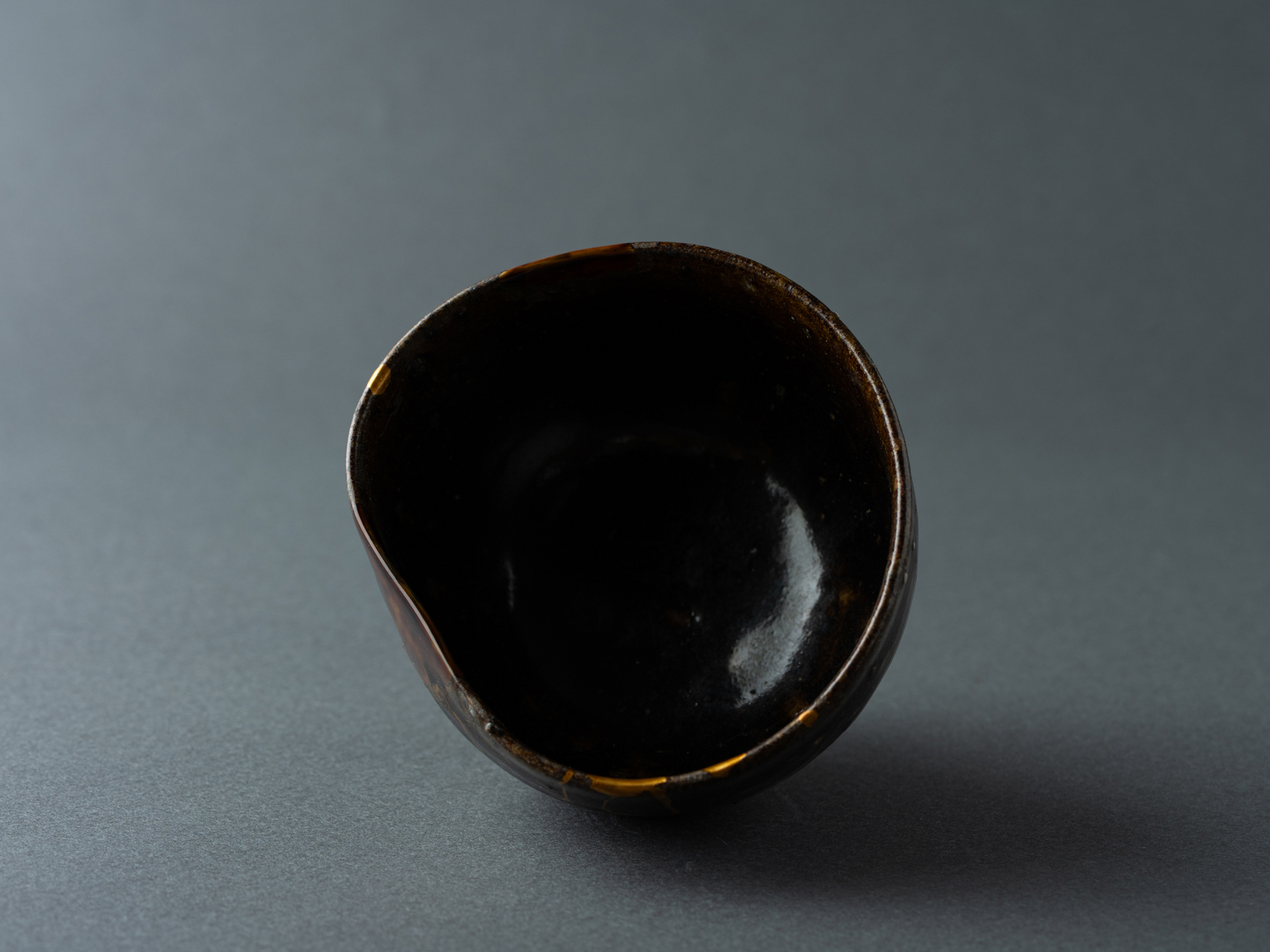
This particular bowl is especially distinctive in form. During firing, another object came into contact with the bowl, compressing one side of the body. By chance, the resulting distortion gives the bowl a form reminiscent of a kutsu chawan.
A kutsu chawan is a tea bowl intentionally distorted from a circular form into an irregular or oval shape. Such asymmetrical forms became closely associated with the expressive tea ceramics of the Momoyama and early Edo periods.
In this case, however, the deformation occurred accidentally during firing, when another object came into contact with the bowl in the kiln.
Condition & Kintsugi Repair
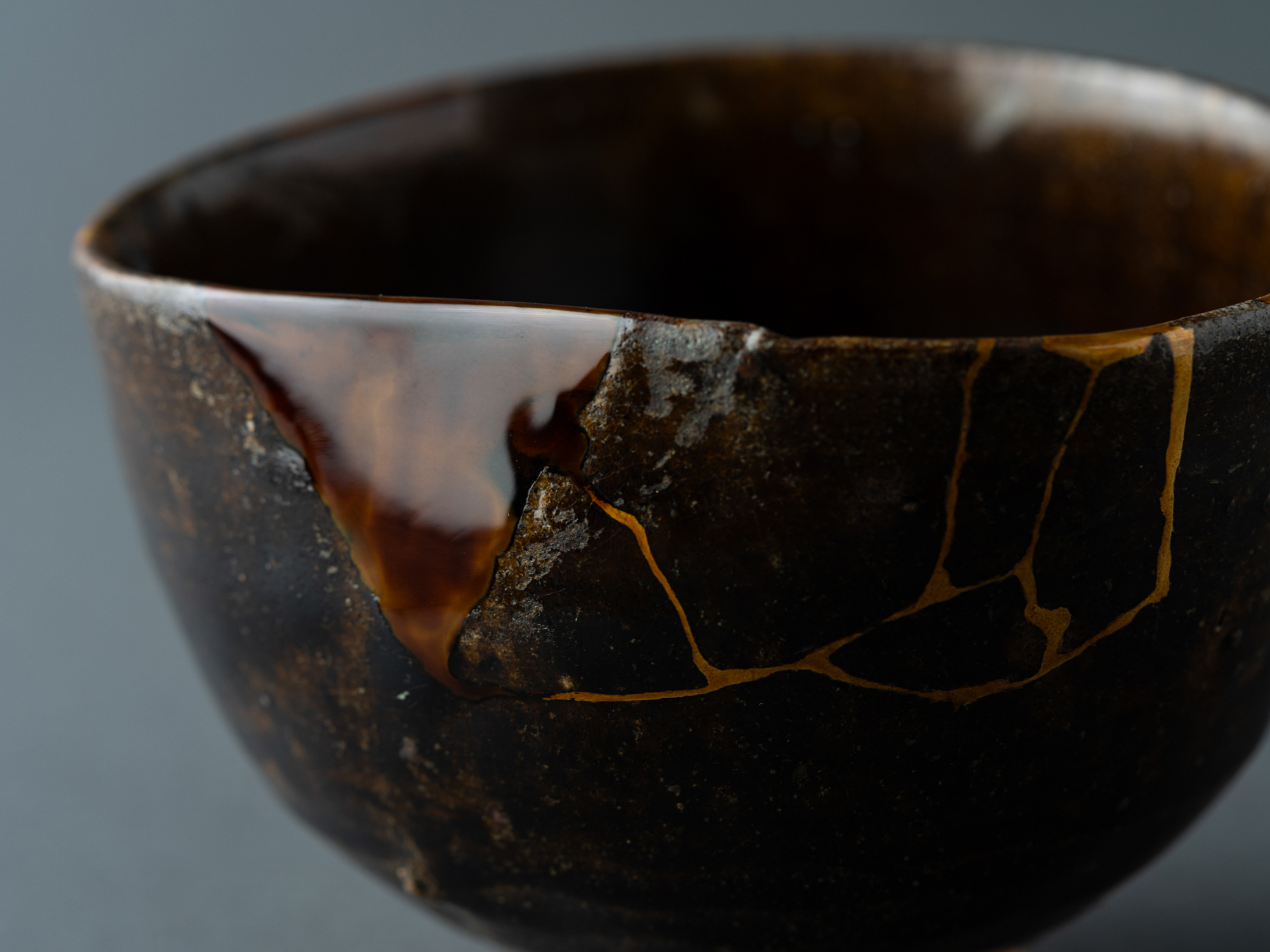
The area where another object had adhered to the bowl during firing was already missing when the vessel was acquired. The smaller breaks surrounding this loss were likely caused when the attached object was later removed.
Five detached fragments were rejoined to the main body using natural urushi lacquer and initially finished with 23.2-karat gold powder. Against the bowl’s near-black amber glaze, however, the gold appeared too prominent, so it was subsequently coated with a translucent layer of shuai-urushi to soften its brightness and sheen.
The larger missing area, where the attached object had presumably been removed, was reconstructed using urushi, Japanese washi paper, and tonoko clay. It was finished with a tortoiseshell-like urushi surface chosen to harmonize with the color of the original glaze. A second, relatively large chip elsewhere on the bowl was treated in the same manner.
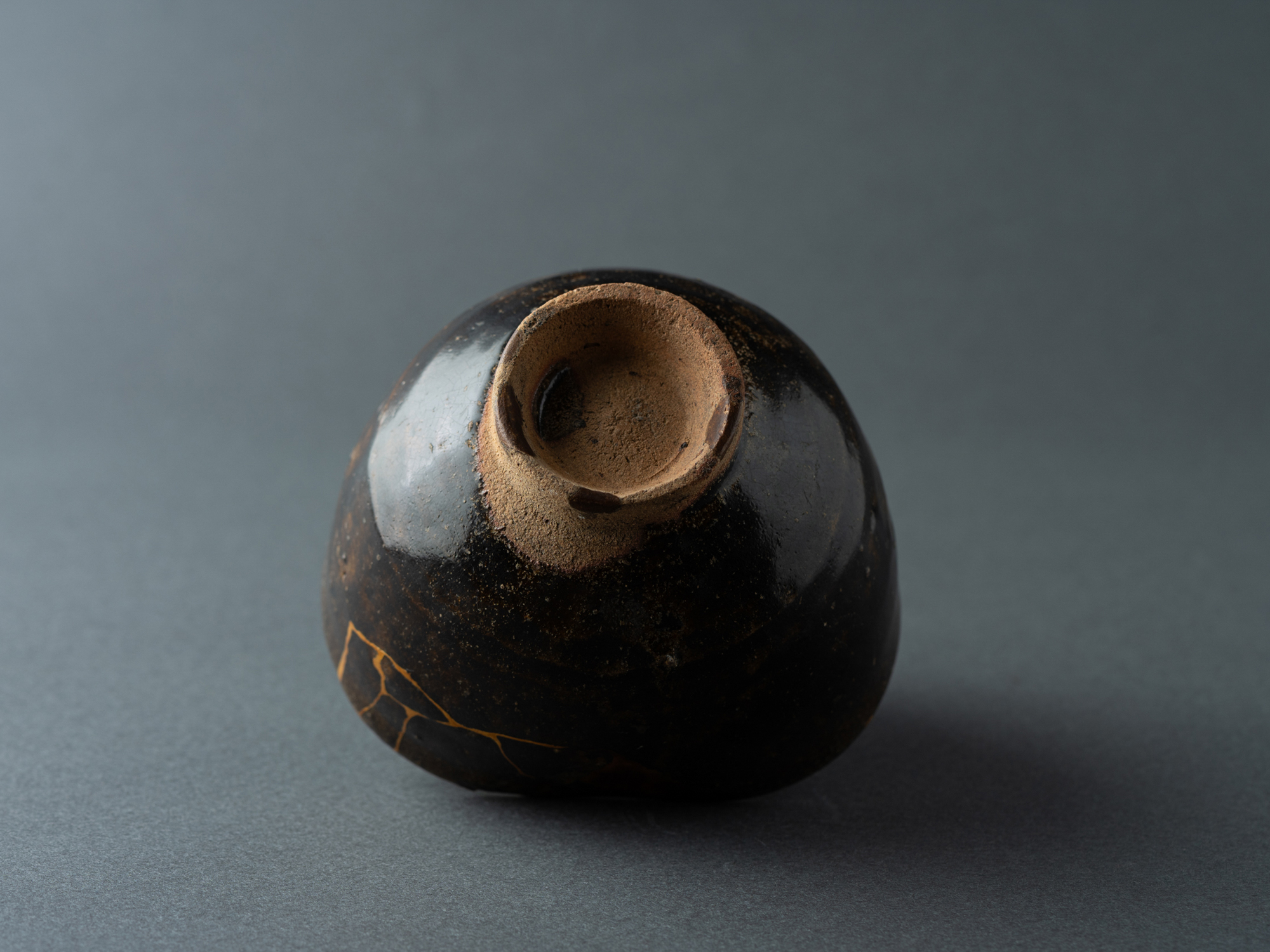
Four chips on the foot ring were also repaired with urushi and finished with tonoko, giving the restored areas an earthy, clay-like appearance that blends quietly with the foot.
Although some surface weathering is present, the bowl remains in remarkably good overall condition for an object believed to have been excavated from a kiln site. It is structurally sound and suitable for practical use as a tea bowl.
Dimensions
Diameter: 9.6–11.1 cm
Height: 7.4–7.7 cm
Foot diameter: 4.5 cm
Measurements are approximate.
Use & Care
Suitable for display as well as practical use as a tea bowl.
For those who enjoy preparing matcha, we particularly recommend using the bowl for tea.
If used, avoid microwave ovens, dishwashers, and prolonged soaking in water. Mild dishwashing detergent may be used. Wash gently by hand and dry thoroughly after use.
Price
2,400 USD
↳ Acquiring a Work & International Shipping
Works can be viewed in person at the YACCA studio in Fukuoka by appointment.
Item No: VS-007